Get a quick blog summary with:

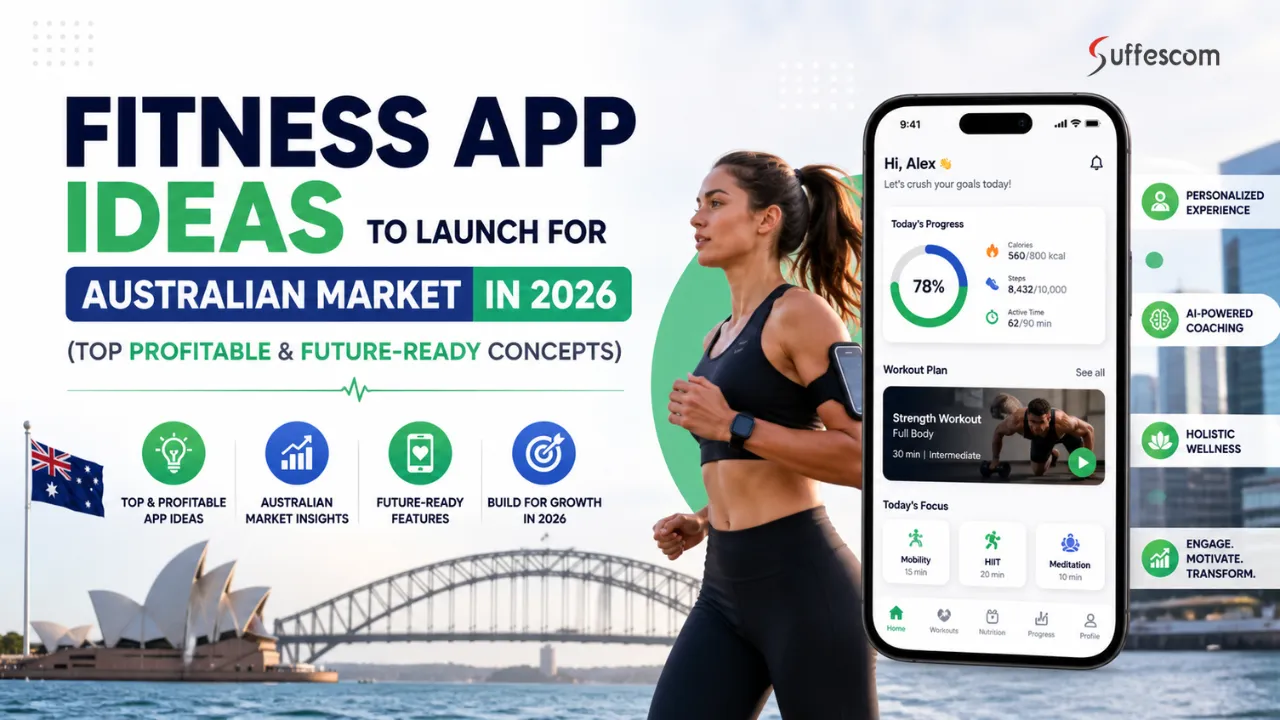
Fitness in Australia has entered a digital transformation with the fitness industry moving away from traditional gym workouts towards innovative, personalized, technology-invested health experiences. The increased use of fitness apps on mobile devices and wearables, AI platforms, and other technologies means that the demand for innovative fitness approaches has never been greater.
By 2026, the next generation of fitness applications will not only provide step counting and workout video content, but also enable access to a holistic health platform that includes all aspects of a person’s health, from physical fitness and mental health to recovery and prevention through health care education.
Reasons for this transformation include shifting consumer expectations (more convenience, personalization and measurable outcomes), the Australian health-focused population, increased awareness of mental health and the growing emphasis by the government on preventative measures.
This blog post will feature twenty-five ideas for new fitness/health app concepts specific to Australia by the year 2026. These ideas include AI-based apps, specialty apps, and scalable sales models. If you are a startup founder, entrepreneur or business owner, these concepts will help you identify new business opportunities and assess their growth potential.
Key Takeaways
- The value of the fitness industry in Australia is estimated at more than $13 billion, with a surge in digital fitness applications due to the increasing use of mobile and wearable devices
- The worldwide fitness application market is anticipated to see a compound annual growth rate of 13-17% until 2030 due to AI and personalized and remote fitness trends
- More than 60% of consumers opt for applications that offer both mental and physical fitness options
- The popularity of wearables such as fitness tracking devices and smartwatches is on the increase in Australia, with many people using them daily
- With a growing ageing demographic in Australia, there is high demand for apps focused on longevity and low-impact fitness, which remains an untapped but lucrative niche
- Companies are increasingly focusing on wellness programs to enhance their employees’ health through fitness apps
Why the Australian Fitness App Market is Booming in 2026
The growth potential for fitness app and digital wellness solution markets in Australia is high given that consumers continue to follow health trends, use their mobile devices frequently, and want an individualised means of reaching their fitness goals through both technology and business.
Market Size & Growth
The fitness apps industry is projected to grow significantly due to increasing popularities of mobile-based fitness options and consumers moving away from traditional gyms. Statista reports growth trends for digital fitness adoption across all of Australia; moreover, based on Grand View Research’s projection, the fitness app market is growing with a CAGR of 13.5% from 2026 to 2033. Thus, there are ample opportunities to launch new fitness apps/businesses in Australia.
Rising Demand for Digital Fitness & Wellness
Consumers in Australia are looking for more convenient, flexible, and customised wellness options than ever before. According to recent data from McKinsey and Company, over 50% of all consumers are spending money on wellness, including fitness, mental wellness, and nutrition., thus driving demand for:
- On-demand fitness.
- Integration of mental wellness into fitness.
- New and individualised fitness plans.
Wearables, AI & Data-Driven Health Adoption
Wearable technology combined with AI is transforming how Australians perceive fitness and health as a broad concept. By having access (via smartwatches, fitness trackers and other devices) to instantaneous data about an individual’s health, including live updates on heart rate, number of calories burned, amount of sleep, etc., Australians now have a much greater awareness of their health than they would have without these technologies. According to the American College of Sports Medicine, wearable technology continues to be the number one fitness trend worldwide, indicating that its significance continues to grow.
Untapped Opportunity Gaps in Australia
Even though the fitness application industry is experiencing substantial growth, there are still many untapped potential opportunities for fitness-related applications in Australia. There is an increasing need for fitness applications providing solutions that meet the needs of our older population; these applications would focus on mobility, lower impact exercises, and increased well being throughout the years of their lives. Similarly, there are limited options available for fitness applications created specifically for participants of the NDIS or users with special needs; therefore, this creates a very targeted niche area with minimal competition.
Top 25 Fitness App Ideas for Australian Market in 2026
Below are some of the most profitable, scalable, and future-ready fitness app ideas tailored for the Australian market in 2026. Each idea focuses on solving real user problems while aligning with emerging trends like AI, personalization, and preventive healthcare.
1. AI-Powered Adaptive Fitness Coaching App
A lot of people in Australia want to get fit and healthy in a way that’s just right for them. So more than sixty percent of people who use fitness apps in Australia like apps that change to help them reach their goals and show how they are doing. These people do not like apps that just give them the workout every time. They like fitness apps that help them with their goals and progress. Fitness apps are very popular in Australia and people want them to be personalized.
Idea:
This fitness app is really cool because it uses intelligence to make workout plans that are just right for each person. It looks at what you want to achieve. How fit you are and it also checks how your body is doing and how you have done in the past. The app is always learning from what you do. It changes the workouts to make them harder or easier and it also tells you when to rest.
It is like having a trainer who gets to know you better and better so you get better results, you do not get hurt as much and you keep wanting to work out. Over time the app gets really good at knowing what will happen when you work out. It tells you the best way to train.
Why it works in Australia:
People in Australia are getting more into fitness routines that they can do at their pace. This is because a lot of Australians have busy lives and some of them work from home.
There are a lot of people looking for fitness apps that’re smart and can tell them exactly what to do. They want apps that can help them exercise without needing a trainer to show them what to do.
Key features of these apps are:
- Fitness plans that are made for the individual using the app
- The app tracks how the person is doing in time and makes changes as needed
- The app can tell if the person is at risk of getting hurt and gives them advice, on how to recover if they do get hurt
- The app works with fitness trackers and other health apps
- The app has a system that helps people reach their fitness goals one step at a time.
Example:
An example of this concept is Fitbod. It is used by people in Australia. Fitbod uses intelligence to create strength training routines. These routines change based on what users say and their workout history.
2. Connected Fitness Ecosystem & Data Intelligence Platform
A lot of people in Australia are using devices to track how they are doing with fitness and sleep and their health. Over 40 percent of Australians now use these devices to see how they are doing with fitness and sleep and their health. This is making people want to have a way to look at all the information from their smart devices so they need something that can put all this information together in one place, for their fitness and health metrics and other health information from their smart devices.
Idea:
The connected fitness ecosystem app is like a one stop shop for all your health and fitness needs. It takes information from things like fitness trackers, nutrition apps, workout logs and sleep trackers. Put it all in one place. This way you can see the picture of your health.
The app looks at all the information it collects and finds patterns, trends and things that you can actually do to improve your health. It gives you things like scores on how you are recovering if you are ready for a workout and tips on how to live a healthier lifestyle.
Why it works in Australia:
People in Australia are using lots of fitness devices and apps but it is hard to keep track of everything. The connected fitness ecosystem app makes it easy by putting all your information in one place. This makes it easier to use. Helps people in Australia make better choices about their health. Australians can really benefit from this because they can see everything they need to know in one spot. The connected fitness ecosystem app is a way to keep track of your fitness and health and it is something that people in Australia can really use.
Key features:
- Can use this with of devices like Apple Health and Fitbit
- It puts all our health and fitness information in one to use dashboard
- This thing uses artificial intelligence to help us understand our health and what might happen in the future
- It tracks our sleep and what we eat and how much we move all in one place
- It gives us ideas on how to be healthier based on who we are
Example:
For example Whoop is a good example of this because it takes all the information from our wearable devices and puts it into one system that helps us know how to get better and perform at our best.
3. Digital Twin & Predictive Fitness App
Fitness is changing because of Artificial Intelligence and predictive analytics. Now people can see what might happen to their health in the future. This is possible because they can look at what they’re doing now and what they have done before. The fitness programs can help users understand what will happen to their health if they keep doing what they are doing. Fitness is becoming more about staying healthy before problems start than just tracking what has already happened. Fitness programs like these use Artificial Intelligence and predictive analytics to make these predictions about the users health.
Idea:
A digital twin fitness app makes a copy of the user’s body. It uses information like how active they are, how well they sleep, what they eat and how they do in workouts. This virtual copy is always figuring out how the body will react to changes in lifestyle, how hard they train and how they recover.
It helps users guess what will happen if they make choices like losing weight, building muscle, getting hurt or getting fitter over time. The app is like a health planner, not just something that tracks what they do.
Why it works in Australia:
People in Australia like using data to make decisions about their health especially when it comes to fitness. This is true for people who love working out and for people with jobs. The app gives users ideas about what will happen if they make choices so they can make smarter decisions and stay healthy for a long time. The digital twin fitness app is a tool for Australians because they can use it to plan their fitness and health.
Key features:
- The system uses a computer model of the body to make predictions.
- This computer model is like a copy of the body.
- It can tell you how fit and healthy you will be in the future.
- The system also looks at how your lifestyle affects your body.
- It checks things like the food you eat, how much you sleep and how you exercise.
- It can even warn you if you are at risk of getting hurt or feeling tired.
- You can also use it with devices that you wear on your body.
Example:
There is something that people use around the world called the ZOE Health Study App. People in Australia use it as part of some research programs. The ZOE Health Study App uses a way of guessing what will happen to your health to see how your body reacts when you eat foods or change the way you live. The ZOE Health Study App is really good at showing how the ZOE Health Study App can help people understand their health better by looking at how their body responds to food and lifestyle changes, with the ZOE Health Study App.
4. AI-Based Fitness Assessment App (Computer Vision)
As computers get better the way we look at fitness is changing. Computer vision is helping people work out better by checking their bodies and movements in time so they do not need a personal trainer.
Idea:
There is a fitness app that uses computer vision. It works with your phone or camera to check how you stand, how you move and how you do exercises. It tells you if you are standing wrong or if you are moving in a way that is not good for you when you work out.
The fitness app can also check your body to see how fit you are. It gives you a workout plan that’s just for you based on how well you can move, how strong you are and how flexible you are.
Why it works in Australia:
Australians are doing home workouts and exercising at home. They like apps that give them feedback like they would get at the gym. Australians do not need a trainer with these apps. This helps Australians save money. It also helps them work out safely and correctly with the fitness apps. Australians can get a workout with these apps.
Key features:
- Time posture and movement correction
- AI powered body assessment reports
- Exercise form scoring system
- Injury prevention alerts
- Personalized workout recommendations
Example:
A good example is PhysiApp. It is widely used in Australia for physiotherapy support. PhysiApp gives guided exercise feedback, for rehabilitation and movement correction.
5. Holistic Fitness, Nutrition & Recovery App
People in Australia are thinking about fitness in a way. It is not about working out anymore. They want to feel good around so they are paying attention to what they eat, how they feel after they work out and how they are doing mentally.
Idea:
This app brings together working out, eating healthy and getting better after a workout in one place. It makes a plan for what you should eat, what you should do when you work out how water you should drink and how you are feeling after you work out based on what you want to achieve and how you live your life.
The app helps people make sure they are doing everything they need to do to be healthy and feel their best by making sure they are eating well, working out and getting rest. This way they can perform at their best. Stay healthy for a long time.
Why it works in Australia:
People in Australia are really getting into the idea of taking care of their body and mind. This is especially true for people and those with busy jobs who want one thing that can help them with all their health needs instead of having to use a lot of different apps.
Key features:
- The program gives you a diet and nutrition plan that’s just for you
- It has workout programs that’re all together in one place
- You can track how you are recovering. How well you are sleeping
- It helps you keep track of how water you are drinking and how many calories you are eating
- The program uses intelligence to give you wellness recommendations that are based on your individual needs
Example:
For example there is a popular app in Australia called MyFitnessPal. This app helps people track what they eat and how much they exercise. Now there are apps that are doing even more like helping people recover and get coaching from artificial intelligence systems.
6. Preventive Health & Clinical Fitness Integration App
Australians are getting really worried about how much they have to pay for healthcare. So they are looking for ways to stay fit and healthy to avoid getting sick in the place.
Idea:
The idea is to have a fitness app that’s also about staying healthy. This health and clinical fitness app helps people exercise and stay healthy by giving them workout plans that doctors think are good. It also checks their health. Looks for signs of problems like being overweight or being at risk for heart disease.
The app can work with doctors and hospitals to give people who’re already sick a special plan to get them back on track.
Why it works in Australia:
This is an idea for Australia because the healthcare system here is really focused on keeping people from getting sick. So an app that helps people stay healthy and gets advice from doctors is a thing. Australians will really like this kind of fitness app that also helps them stay healthy.
Key features:
- Health risk assessment tools to help people know if they are healthy
- Doctor-approved fitness programs that people can follow
- Chronic disease prevention tracking to stop people from getting sick
- Integration with records when the doctors say it is okay
- Personalized wellness dashboards that show how people are doing
Example:
For example Noom is an example of this it is used by people all around the world and in Australia. Noom uses things like psychology and health tracking to help people make lifestyle changes that last a long time. The thing about Noom is that it helps people make changes that they can keep doing for a time.
7. Insurance-Linked Fitness & Wellness App
Due to the increasing cost of health care in Australia, insurers are moving toward preventive health initiatives that reward the user for maintaining a healthy lifestyle.
Idea:
Insurance-connected apps allow users’ health and fitness activities to be linked with insurance companies and allow users to earn rewards, discounts, or benefits on insurance premiums for hitting fitness milestones, such as daily step counts, frequency of exercise, and healthy biometric measures (e.g., blood pressure, cholesterol, etc.).
Wearable technologies that gather health and exercise data from users will be used to assess lifestyle behaviour while providing gamified and money-driven incentives to encourage users to engage in preventive health behaviours.
Why it works in Australia:
The insurance and healthcare system in Australia is robust and growing as many insurance companies are implementing wellness programs to help keep costs down on long-term claims.
Key features:
- Reward systems based on fitness that are attached to insurance
- Use of wearable devices to track health and fitness data
- Support with goals and achievements in improving lifestyle behaviour
- Get rewarded for participating in wellness challenges
- Adjust premium pricing based on a person’s health score
Example:
For example, the Vitality program (which is implemented in multiple countries around the world through joint participation by insurers) allows users to get incentives for being more active and engaging in healthy behaviours through insurance benefits.
8. Prehab & Post-Rehabilitation Fitness App
Due to an increase in both sport and age-related injuries, Australians have placed a greater emphasis on recovery from injury, preventing injury from occurring, and accessing professional support around injury recovery.
Idea:
The idea behind a prehabilitation and rehabilitation Fitness App is to give you guided exercise interventions to prevent an injury before it occurs and recover after having undergone an injury or other form of physical strain.
This app offers physiotherapist-designed exercise routines, mobility training and progressive rehabilitation plans based on an individual user’s condition, helping them to maintain safe patterns of movement, thereby reducing their chance of reinjuring themselves.
Why it works in Australia:
Due to the abundance of people actively engaged in sports and an increasing number of people aged 55 and older, injury prevention and rehabilitation programs for these two groups of people are becoming more and more popular.
Key features:
- Exercise programs based on physiotherapy methods
- Injury prevention training modules
- Step-by-step recovery plans
- Tracking mobility/flexibility
- Expert tips on how to monitor your progress.
Example:
One example is PhysiApp, which is used by numerous people in Australia who require rehabilitation assistance.
9. Longevity & Active Ageing Fitness App
As the number of aged Australians continues to grow steadily, there has been an increase in demand for fitness solutions geared toward maintaining health, mobility and independence over the long-term.
Idea:
The longevity and active ageing fitness application is specifically designed for use by seniors. It allows users to maintain their strength, balance, flexibility and mental wellbeing. The low-impact workouts offered through the application are suitable for seniors as well as providing fall prevention exercises, health monitoring tools that have been developed with consideration to the specific needs of seniors etc.
This application is aimed at improving overall quality of life by promoting independence and reducing health risks associated with aging.
Why it works in Australia:
The growing number of persons aged 60 years and older equated to a growing demand for safe, accessible and medically-supervised fitness solutions for seniors.
Key features:
- Low-impact exercise classes
- Fall prevention training and balance training
- Health monitoring systems
- Cognitive health exercise
- Fitness instruction from a physician typed
Example:
An example is SilverSneakers, which is a fitness program tailored to older adults, originating in the U.S., but is also in Australia.
10. Social & Gamified Fitness Community App
Today’s users prefer to experience fitness in comparison with others.
Idea:
An interactive fitness app will create the opportunity for users to work out by using social media (for example), while creating a community around fitness. The app will give the user tools to develop a competitive and rewarding workout experience with leader-boards, badges, group challenges, and rewards based on the number of workouts completed over time to improve user engagement and provide consistent results over time.
The user experience will include both social interaction with the user’s friends and family and provide rewards for achieving fitness objectives. In a community-focused nation like Australia, social interaction significantly contributes to continued adherence to a fitness regimen and ultimately long-term success.
Why it works in Australia:
Competitions or challenges in an interactive fitness application can be accomplished by utilizing the following:
Key features:
- Group challenges & competitions
- Ability to share with others/socially
- Leaderboards, badges, and other forms of recognition
- Fitness Streak System
Example:
A very successful example of using social networking and fitness tracking for runners and cyclists in Australia is Strava.
Looking to Capitalize on Australia’s Growing Fitness Market?
Get a custom app strategy from our experts.
11. Fitness Partner Matching & Accountability App
Fitness is fraught with inconsistency, with many people unable to sustain motivation while exercising independently.
Idea:
This mobile application connects you with compatible workout partners allowing for the creation of an accountability partner or a small group (for both online and offline training). As such, this application promotes consistency among its users.
The matching algorithms are designed to find users partners with the same fitness goals and motivation levels to enable them to keep their workouts productive regardless of how busy they may be.
Why it works in Australia:
Busy professionals and other people who have hybrid lifestyles in Australia will often abandon their exercise programs because they lack motivation; therefore, an accountability based approach is highly relevant.
Key features:
- Features of AI matching-based fitness partner pairing
- Location-based group discovery
- Shared tracking of exercise
- Reminders for accountability
- Community building through chatting and providing encouragement
Example:
The Fitbit Community Challenge is an example of a similar concept to this application where users are encouraged to stay active through social accountability features provided by the application.
12. Hybrid Body + Mind Fitness Challenge App
In today’s fast-paced world, it has become more challenging for consumers to integrate both physical and mental health into their daily lives due to increased levels of stress and inactivity.
Idea:
This app provides structured fitness routines and mental wellness routines such as journaling and meditation. The user will follow guided daily/weekly programs that aim to increase their physical and mental strength at the same time through a single process.
The app has created “mind & body” challenges to improve consistency and provide users with the tools they need to enhance their public health and wellness through exercise.
Why it works in Australia:
A growing number of Australians are prioritising their mental well-being as much as their physical health, causing increased demand for holistic wellness options.
Key features:
- Use of breath and meditation techniques
- Track progress to form habits
- Reward users who complete streaks
- Personalised wellness journey through exercise
Example:
Center by Chris Hemsworth, which combines fitness training with mindfulness and nutrition.
13. Creator-Led Fitness Platform (Coach Monetization App)
Today’s fitness professionals face challenges in expanding their personal brands beyond the existing limits of physical clients, resulting in their earnings potential being restricted.
Idea:
This software supports Fitness Trainers, Influencers, and Coaches to develop and distribute digital content (e.g., Workout Programs, Live Streaming Workouts, Coaching Subscription Services) and provide tools for audience growth, content delivery and revenue generation.
Through this software, creators can develop and manage independent fitness businesses directly through the application.
Why it works in Australia:
The Creator Economy continues to grow rapidly, with the majority of Australia’s fitness trainers turning toward Digital Coaching Models to create scalable income.
Key features:
- Tools Available for Subscription Monetization
- Live Streaming Workouts
- Video Library of Content
- Audience Engagement
- Analytics Dashboard for the Creator
Example:
Trainerize is commonly referred to by Fitness Professionals as their solution for Online Coaching or Client Management.
14. Fitness Marketplace for Trainers & Services
Locating a fitness coach or wellness expert can take a lot of time and often lacks clarity when it comes to pricing and availability.
Idea:
Our mobile application was developed to solve this issue by providing a fitness marketplace platform for users to identify, evaluate and reserve personal trainers, yoga teachers/nutritionists/wellness coaches via other user-generated evaluations/feedback based on criteria like rating, geographic region and expertise.
It gives users all the information necessary to gain access to an array of professional Fitness Services on one single mobile-based technology platform.
Why it works in Australia:
Individuals want to utilize flexible (on-demand) fitness services rather than making long-term commitments to a fitness center, particularly in urban locales.
Key features:
- Immediate Bookings
- Star Rating System
- User Reviews
- Payments Made Secure
- Finding Trainers Based on Geographic Location
Example:
Business Model for Urban Company Fitness Services.
15. Corporate Wellness & Employee Performance App
The productivity, engagement and long-term business outcomes of an organisation will be influenced by its worker’s health but few businesses actually have an established wellness programme to support this.
Idea:
This application has been designed to provide a framework for wellness within organisations, by offering tools for measuring and tracking employees’ activities/progress via activity tracking, team challenges and dashboards used by HR departments, etc.
The app also supports corporate benchmarks for the overall health of your organisation, as well as individual employees.
Why it works in Australia:
As a result, increasing numbers of companies are now purchasing/implementing employee wellness programmes in order to reduce employee absenteeism and improve the overall health of their workforce.
Key features:
- Corporate wellness dashboards
- Team fitness challenges
- Health tracking reporting
- Tools to encourage employee engagement
- System of incentives and rewards
Example:
Virgin Pulse, a global employee wellness platform.
16. Offline-to-Online Gym Digitization App
Gyms and fitness studios cannot retain customers if they do not provide a digital flexible or hybrid experience for their gyms.
Idea:
This mobile app brings a digital presence to both gyms and fitness studios with the ability to offer online memberships, virtual classes, booking systems, and hybrid training programs by connecting to an offline gym through a digital platform.
Thus, allowing gyms to expand beyond their physical location.
Why it works in Australia:
After the popularity of home workouts, many gyms have started adopting hybrid gym, and fitness models to satisfy the changing needs of consumers.
Key features:
- Online class bookings
- Virtual training sessions
- Fitness club membership management
- Instructor dashboards
- Hybrid workout tracking
Example:
Mindbody, widely used for fitness studio management.
17. Outdoor & Adventure Fitness App (Australia-Focused)
The great outdoors is the fitness choice of many Australians, due to their lifestyle and geography.
Idea:
The app promotes outdoor fitness activities, including hiking, surfing, cycling, working out on the beach or doing adventure sports. The app provides location specific fitness routes, fitness activities that are guided by the app (think of running the route based on GPS, or being guided how to do an outdoor activity), and community driven challenges.
Ultimately the app converts Australia’s natural environment into a fitness ecosystem.
Why it works in Australia:
There is a strong outdoor culture in Australia, and adventure sports play a huge role in this culture; therefore this makes this app very relevant to the majority of Australians.
Key features:
- Fitness routes on a GPS system
- Outdoor workout plans
- Community challenge participation
- Activity tracking for trails and beaches
- Adventure fitness goals
Example:
AllTrails, widely used for outdoor exploration and fitness.
18. Workplace Fitness App for Remote Employees
Health problems caused by sedentary behavior have been increasing among employees who work remotely/hybridly; this behaviour can create long-term issues for worker’s health and ultimately for employers through increased healthcare costs.
Idea:
With this in mind, this app is designed to promote better overall employee well-being through:
- Short desk workout routines,
- Posture correction alerts,
- Activity reminders,
- Relaxation & stress management exercises that can be done as part of an employee’s daily work schedule.
This app allows employees who are working from home to get exercise.
Why it works in Australia:
With more than 50% of all employees working from home effectively, there are many companies seeking ways to alleviate the negative health impacts associated with this growing trend.
Key features:
- Desk exercises
- Correct your posture
- Remember to move
- Manage your stress
- Track your workplace wellness
Example:
Stretchly is a productivity and movement reminder tool.
19. Fitness App for NDIS / Special Needs Users
Fitness programs that suit both the physical and cognitive requirements of individuals with disabilities are frequently not available to them.
Idea:
This application offers adaptive workout programs specifically designed for individuals with special requirements, such as those who are enrolled in the NDIS or who have special needs. The workout programs provided by this application include safe and accessible guided workouts and exercises to build mobility, strength and independence.
All users, regardless of ability, will have equal access to becoming fit through this application.
Why it works in Australia:
The need for accessible digital health and fitness products is especially strong in Australia due to NDIS’s focus on providing support to individuals with disabilities.
Key features:
- Adaptive workout program,
- Caregiver tracking,
- Accessibility-first user interface,
- Physiotherapy guided workouts,
- Progress tracking.
Example:
PhysiTrack, used for rehabilitation and adaptive exercise support.
20. Immersive AR/VR Fitness App
Engagement in traditional workout settings is low due to a lack of interest, leading many people to be unmotivated, which results in a high dropout rate.
Idea:
This application takes advantage of augmented reality and virtual reality technologies to convert forms of fitness into interactive, immersive experiences via multiple mediums, including virtual boxing, an experience like cycling, dance, and gamified environments.
This allows for more engaging and interactive forms of exercise.
Why it works in Australia:
More and more tech-savvy consumers are looking for digital fitness experiences that blend entertainment with health that includes a reason for dancing or exercising.
Key features:
- VR workout environments
- Integration of motion tracking
- Gamified workout experiences
- Multiplayer competitive challenges
- Augmented reality (AR) overlays on methods of exercise.
Example:
Supernatural (Meta Quest VR fitness platform).
21. AI Micro-Health Coach (Daily Habit Optimization App)
Consistency with respect to health and wellness can be challenging for users who do not have daily structure or routines to follow.
Idea:
Therefore, this app serves as a “micro-health coach” and gives the user guidance to develop small, consistent daily habits (e.g., hydration, correcting posture, improving sleep, being active). This app’s artificial intelligence will provide the user with guidance for small but consistent improvements in their health.
Rather than utilizing a comprehensive fitness program to help improve health and well-being, the app helps users improve their health and well-being by way of a series of micro-actions.
Why it works in Australia:
Busy professionals prefer to improve their wellness as simply and easily as possible by incorporating it into their daily schedule.
Key features:
- Habit tracking on a daily basis
- Nudges from artificial intelligence
- Tracking sleep and hydration
- Micro-goals in a systematic fashion
- Insights regarding behavior
Example:
Habitica, which gamifies daily habit formation.
22. Pilates, Mobility & Posture Correction App
Long hours spent sitting at work result in either spinal problems, contributing to growing concerns regarding an individual’s physical condition.
Idea:
Offices are implementing different corrective workout programs using physical therapy and proper physical exercises to improve the flexibility, strength, and alignment of the spine.
These programs place greater emphasis on correcting improper postures than providing high-energy workouts.
Why it works in Australia:
Because of this, there is growing demand for effective corrective workout solutions as office workers become more aware of concerns related to their spines and posture, leaving many looking for additional solutions.
Key features:
- Guided Pilates sessions
- A system for tracking proper posture
- Programs for improving mobility
- Programs for strengthening the core
- Programs for preventing injuries.
Example:
Pilates Anytime, a structured Pilates training platform.
23. Sleep, Recovery & Performance Optimization App
Sleep quality and recovery have a big impact on fitness performance, but most users do not monitor either accurately.
Idea:
This app will improve your fitness result by monitoring your sleep pattern, recovery levels, stress, and ability to participate in physical activity so you can balance training intensity with the appropriate recovery cycle.
Why it works in Australia:
The rise of the understanding of sleep health, and how recovery science affects how people behave toward fitness and their use of apps, is having an impact on fitness behavior and app use.
Key features:
- Sleep-tracking system
- Recovery Scores
- Stress Scores
- Insight into readiness for performance
- AI/Recommendation Engine.
Example:
WHOOP, a leading recovery and performance optimization platform.
24. Voice-Controlled AI Fitness Coach App (Hands-Free Training Experience)
Inconsistent use of screens during workouts reduces flow and efficiency for those who primarily exercise at home and out-of-doors.
Idea:
With this app, you don’t need to look at the screen to utilize voice control. A real-time voice fitness coach will guide you through your workout. It starts session times, counts repetitions, provides audio motivational cues and timing; it will help maintain proper form by providing audio cues for how to maintain correct posture.
With an AI voice recognition system, this app enables a hands-free experience that feels like a personal trainer speaking to you while you work out.
Why it works in Australia:
There has been an increase in Australians’ interest in outdoor workouts, home fitness and flexible training regimens, which indicate a strong need for hands-free guidance to increase safety and ease of use.
Key features:
- Voice-guided workout sessions
- Real-time counting and timing of repetitions
- AI-based motivational coaching
- Audio-based guidance on how to maintain proper form while working out
- Integration with wearables
Example:
An example of this growing demand for hands-free guidance is NTC’s voice-guided workout sessions in different workout modes.
25. Hyperlocal Fitness Discovery & Booking App
To locate fitness classes or wellness activities closer to home normally involves using many separate sources creating a cluttered and broken user experience.
Idea:
Finding and booking hyperlocal fitness services (gyms, yoga classes, bootcamps, personal trainers, wellness events) based on geographical location will be available through this app. All the available fitness options near me will be aggregated into one platform with the ability for users to see real-time availability and book into those classes.
Users will be able to see and access all of the available local fitness options, making it easy to instantly find what is taking place near them.
Why it works in Australia:
Fitness in Australia is very community based with many boutique studios, beach workouts and community based fitness programs that many are involved in.
Key features:
- Search fitness options available in my area by geographic location
- The availability of classes on a real time basis
- A listing of trainers and studios
- An instant booking system
- Ratings and reviews of fitness provider
Example:
ClassPass is currently one of the best ways to find and book classes at many different locations/studios.
Feature Breakdown for Each Fitness App Idea
| App Idea | Key Features | Complexity Level |
| AI-Powered Adaptive Fitness Coaching App | AI personalization, real-time workout adjustment, wearable integration, progress tracking | High |
| Connected Fitness Ecosystem & Data Intelligence Platform | Multi-device integration, unified health dashboard, predictive analytics, AI insights | High |
| Digital Twin & Predictive Fitness App | Body simulation model, predictive health outcomes, lifestyle forecasting, risk analysis | Very High |
| AI-Based Fitness Assessment App (Computer Vision) | Posture detection, movement analysis, real-time feedback, form correction | High |
| Holistic Fitness, Nutrition & Recovery App | Diet planning, workout tracking, recovery monitoring, sleep integration | Medium |
| Preventive Health & Clinical Fitness Integration App | Medical fitness programs, risk assessment, chronic disease prevention tools | High |
| Insurance-Linked Fitness & Wellness App | Reward system, insurance integration, health scoring, activity tracking | High |
| Prehab & Post-Rehabilitation Fitness App | Physiotherapy exercises, injury prevention, recovery programs, mobility training | Medium |
| Longevity & Active Ageing Fitness App | Low-impact workouts, fall prevention, mobility tracking, senior-friendly UI | Medium |
| Social & Gamified Fitness Community App | Leaderboards, challenges, community groups, streak tracking | Medium |
| Fitness Partner Matching & Accountability App | AI matching, location-based discovery, shared tracking, accountability system | Medium |
| Hybrid Body + Mind Fitness Challenge App | Meditation, workouts, habit tracking, gamified challenges | Medium |
| Creator-Led Fitness Platform | Content monetization, live classes, subscriptions, creator dashboards | High |
| Fitness Marketplace for Trainers & Services | Booking system, trainer listings, payments, reviews, location search | Medium |
| Corporate Wellness & Employee Performance App | Employee dashboards, team challenges, wellness analytics, rewards system | High |
| Offline-to-Online Gym Digitization App | Membership management, hybrid classes, booking system, digital training tools | Medium |
| Outdoor & Adventure Fitness App (Australia-Focused) | GPS tracking, outdoor workouts, trail maps, community challenges | Medium |
| Workplace Fitness App for Remote Employees | Desk workouts, posture alerts, activity reminders, stress reduction tools | Low |
| Fitness App for NDIS / Special Needs Users | Accessibility features, adaptive workouts, caregiver tracking, guided routines | High |
| Immersive AR/VR Fitness App | VR workouts, motion tracking, gamification, immersive training environments | Very High |
| AI Micro-Health Coach App | Habit tracking, AI nudges, sleep insights, daily wellness reminders | Medium |
| Pilates, Mobility & Posture Correction App | Guided Pilates, posture tracking, mobility training, injury prevention | Medium |
| Sleep, Recovery & Performance Optimization App | Sleep tracking, recovery scoring, stress monitoring, readiness insights | High |
| Voice-Controlled AI Fitness Coach App | Voice-guided workouts, hands-free control, AI coaching, wearable sync | High |
| Hyperlocal Fitness Discovery & Booking App | Location-based search, class booking, trainer discovery, reviews system | Medium |
Validation Checklist Before Launching a Fitness App Idea
It’s crucial to validate whether your fitness app concept has the necessary market demand and commercial opportunities before committing to its mobile app development. This check list is designed to provide support to founders and corporations as a means of minimizing Risk and creating applications that address real issues in the Australian Fitness Market.
Identify Market Demand in Australia
Identifying and confirming the market demand is the first step in establishing if your Fitness App has merit. Assess if Australians (now or in the future) are searching for or using similar products, and if there are gaps in the current market. This includes evaluating existing trends in fitness, clearly identifying consumer purchasing patterns, as well as indicators of health issues (obesity, mental health concerns, and aging population demographic). You can use industry sources such as Statista, as well as Google Trends to determine if demand exists prior to developing your App.
Define Target Audience Clearly
Defining your targeted user community will be at the core of your Application’s overall success. By doing this you are confirming that there is an identified user group (who are you creating the App for?) having the distinct characteristics/attributes from all other user groups (working professionals, athletes, seniors, and NDIS users). Each of these four communities needs to be served based upon their own specific fitness requirements, and in creating an App designed for each specific community you will have the benefits of designing specific features, services, UI/UX, and marketing strategies that will appeal to how that particular group of users engages with your App.
With all of the variations in the lifestyles and behavior of urban and rural Australian users, providing targeted marketing efforts will be very critical to the success of your application.
Analyze Competitors & Gaps
Competitor research is an essential aspect of developing your fitness app. It allows you to see what is currently present in the market and identify where current solutions fail to meet the needs of users. By researching fitness apps that are performing well, you will discover where consumers think features are missing from fitness applications as well as whether or not there are quality experiences created by these apps, or if there are opportunities for you to enter non-competing niche markets with your fitness app (for examples recovery fitness apps may not have as many competing options as other types of fitness apps such as general fitness tracking or tracking).
Validate Monetization Strategy
After conducting your competitor analysis, the next step in creating a successful fitness app idea is to have a clear and sustainable revenue model for your app. Possible models for your app’s revenue stream could include subscriptions, free or premium subscription models, in-app purchases from users who want to buy additional features, or corporate partnerships. In Australia at least, consumers will only pay for value–based solutions if the price matches the value they receive from them. Developing a strong monetization model will help support long-term success with your fitness app and continuing to build your business.
Build MVP First (Avoid Overbuilding)
Creating a Minimum Viable Product provides the opportunity for you to test out a basic idea with a low investment before expanding any further. By initially creating only basic features that solve the core user problem in an adequate way versus developing a full complex solution, you can obtain meaningful user feedback to help with assumptions validation and to mitigate the risk of developing an application. There are numerous examples of successful Australian fitness applications that launch initially as an MVP versus an already established solution.
Plan for Scalability & Retention
The second major component needed by the fitness application is scalability, to support the large number of users expected, and retention or how users will continue to use the application over time. Further, the fitness application must take into account “how” each of these applications will keep users engaged long after they start using the application (e.g. personalization, gamification, and habit-forming functionality). In general, fitness applications in Australia that have not been able to retain users have had difficulty after being downloaded at a high rate so retention planning has become critical to the overall success of the application.
Ready to Turn Your Fitness App Idea into a Real Product?
Talk to our experts and get started today.
Monetization Models for Fitness Apps in Australia
The one most important thing for any fitness app to succeed in the future is monetisation. In Australia, many people want to pay for high-quality wellness solutions, especially those that can provide personalized experiences, ease of use, and measurable improvements in their health. The table below shows some of the best types of monetization models used by successful fitness apps.
Subscription Model
A subscription-based business can charge customers on a recurring basis (monthly or annually) for access to premium fitness features, including premium workouts, AI coaching, workout plans, or advanced analytics, and will work best for apps that provide users with continual value in the form of personalized training or wellness tracking. Both of these business models provide reliable revenue streams due to predictable usage and the consumer experience being so reliant on the continual improvement of app usage.
Example: For instance, the app “Sweat” (Kayla Itsines) offers a subscription model that provides structured training programs to paid subscribers around the world, including many users from Australia.
Freemium Model
The freemium model offers users access to basic functionality of the app for free (i.e., limited access to features), but users will pay for access to features that are considered to be premium (i.e., AI coaching, analytics, or exclusive workouts) and not available for free. This type of model is a great way to attract a large number of users quickly and convert them into paying subscribers by providing users who have shown some level of engagement with the app the opportunity to convert into paying customers over time.
Example: MyFitnessPal is an example of a freemium app in Australia where users can use the app for free for tracking calories and, after becoming engaged users, can begin paying to receive more advanced nutritional analytical services.
In-App Purchases
A paid feature business allows consumers to access a variety of features, programs, meal plans, or digital content within an app, but without the need to commit to a subscription. This business model is most effective for fitness apps that provide user-generated gamification and/or content-rich features.
Example: For example, Centro (founded by actor Chris Hemsworth), has numerous types of training, challenges, and classes that can be purchased in-app by users.
Corporate Partnerships
Corporate partnerships are another business model type where fitness apps partner with businesses to provide businesses’ employees with wellness programs, employee health tracking dashboards and company fitness challenges. Businesses pay their employees to participate in the wellness programs as a way to improve employee productivity and decrease healthcare costs.
Example: For example, Virgin Pulse (an app used by several Australian companies), provides a corporate wellness solution through their app that incorporates employee wellness tracking, employee engagement program data and employee health tracking dashboards.
Marketplace Commission
Fitness marketplace applications generate income through collecting commissions on every single booking placed through the system, including bookings for trainers, yoga instructors, or other wellness-related services. The marketplace revenue model will also expand as more providers join the application, enabling additional growth opportunities for the applications.
Example: For example, ClassPass (operating in the main Australian cities of Sydney and Melbourne) allows users to find and book fitness classes from multiple studios and serves as a source of revenue through subscriptions + Partner commissions.
Real-World Use Cases of Fitness Apps in Australia (2026 Scenarios)
Fitness Apps (in Australia) are no longer limited to just tracking steps or tracking workouts; They are becoming fully integrated Health Ecosystems that are being used across all industries, age demographics, and lifestyles. The real-world scenarios below demonstrate how Fitness Apps will solve real-world problems that Fitness Apps faced in 2026.
Corporate Wellness App Used by Australian Enterprises
With many Australian enterprises adopting fitness/wellness applications to improve employee health, reduce absenteeism, and increase productivity, the use of these types of apps has integrated into Corporate Wellness Program Solutions – where employers can have an employee participate in challenges, meetings/goals, and monitoring health initiatives with HR and finance screens used to correlate overall employee health/well-being and employee productivity.
For example, Australian companies use solutions such as Virgin Pulse (by Australian Corporations to Implement structured corporate wellness programs) to implement corporate wellness initiatives and impact employee health/productivity.
Fitness App for Aging Population
As we see an increase in the number of elderly Australians, many of those over 60 are now benefiting from using fitness apps to stay active, maintain their independence, and improve their overall health. A lot of these fitness applications specifically cater to the low-impact nature of exercise for senior citizens (balance training and guided routines) and can assist with reducing fall risk, concomitant joint problems, and lifestyle illness.
For example, SWEAT Silver (an Australian initiative developed from the ecosystem of the original SWEAT concept) and other types of senior wellness programs have been developed to meet the growing demand for active ageing options for senior citizens.
Trainer Monetization via Creator Fitness Platforms
Australia’s fitness experts use internet resources that can help them build their businesses by supporting their coaching, providing video content, delivering e-learning programs, and developing customer relationships. Digital channels allow trainers to communicate with more customers than they would through brick-and-mortar gyms.
For instance, the Kayla Itsines’ SWEAT ecosystem illustrates how fitness trainers can create a business that serves a broader global audience through the use of digital systems and platforms.
Remote Worker Using Micro-Fitness & Posture Apps
With the growing number of Australians choosing to work from home and utilise hybrid work options, employees are developing new habits related to physical activity during their long hours of working. These new habits include doing micro fitness activities that incorporate short bursts of exercise within the workday. Micro fitness applications offer quick exercise breaks, reminders to correct your posture when you are not sitting in a good position, and guided routines to improve your mobility. As a result of these applications, employees have improved their concentration, decreased the incidence of back pain, and continue to maintain adequate levels of activity on a daily basis.
Another example can be seen in the prevalence of apps that promote fitness-related activity for dispersed workers; examples of business/fitness apps include Fitstop, which employs a digital strategy to create community by increasing users’ physical activity levels.
Development Cost of Fitness Apps in Australia (2026)
The cost to develop fitness applications across Australia in the year 2026 will depend on various factors including the app’s complexity, whether artificial intelligence (AI) works within it, whether it connects to any wearable devices, how well designed the application is, and the backend infrastructure supporting it. Many of the fitness applications available today are not named as simple tracking apps; they include features such as artificial intelligence coaching, real time analytics, and multiple platforms integration; therefore they tend to have a much higher development cost than Traditional tracking applications.
An entry-level fitness application containing only basic features (such as tracking workouts and allowing for profile creation, or creating simple user interface/user experience (UI/UX)) would usually cost between AUD 30,000 and AUD 80,000 in Australia. This type of application would be ideal for a startup wanting to experiment with their fitness concept or entering their fitness app as an MVP into the marketplace.
A mid-range fitness application that has more advanced capabilities such as creating personalized training plans, tracking nutrition, integrating with wearables, and including gamification would typically cost between AUD 80,000 and AUD 180,000 in Australia. Mid-range fitness applications are meant to be more scalable and to provide businesses taking a long-term approach to capturing a share of the Australian fitness marketplace.
Developing an advanced, AI-enabled fitness application that incorporates such features as computer vision; predictive analytics; modelling digital twins; or integrating entire fitness ecosystems can typically run from AUD 180,000 to AUD 500,000+, depending on their complexity and scalability requirements. These are considered “enterprise solutions,” which focus on engaging consumers and providing multiple opportunities for monetizing the consumer.
Key Factors Affecting Cost
- App complexity with features: Incorporating advanced features such as AI coaching, wearables integration and real time tracking into the app will increase the total amount of money required to build it.
- UI/UX Design Quality: Designing highly interactive, gamified and user-friendly designs takes more effort, therefore more money will be spent on UI/UX design.
- Technology stack: Use of AI, machine learning, cloud systems, and advanced backend architecture adds to overall cost.
- Third-party integrations: Connecting wearables like Apple Health, Fitbit, or APIs increases development and testing efforts.
- Platform choice: Developing for one or two major platforms such as iOS or Android will impact on the time/resources available, and therefore will increase the overall cost of development.
- Compliance & Data Security: Compliance with Australian data privacy laws requires developers to build apps with a robust degree of security to meet the new regulation, adding to the level of complexity in creating the app.
- Maintenance and Scalability: Changes to an app over time such as regular updates can add on-going expenses to develop/maintain the app. Other long-term expenses will include server costs and the cost of scaling the infrastructure.
Challenges in Building Fitness Apps (And How to Overcome Them)
Developing an application for fitness in Australia is a very good opportunity; however, there are a number of challenges associated with developing a fitness application that is successful and scalable. Addressing these challenges as they arise will help create a more effective fitness solution.
User Retention & Engagement
The main issue with many fitness applications is their ability to retain their users post-download; therefore, fitness applications generally have high uninstallation rates within several weeks of use. Users frequently are discouraged from using their applications once they are unable to see results, turning individuals to look for alternative methods of motivation.
How to overcome: Ways to motivate and retain users in the fitness application environment are through gamifying the experience (utilizing game mechanics to motivate users), personalizing the experience for the user using Artificial Intelligence technology, providing streak rewards, and including social features for user engagement over time.
High Competition in the Market
The fitness application industry is very competitive; therefore, it is important that your fitness application has its own unique value proposition or niche focus. Distinguishing oneself from other global and local applications that provide similar features is difficult.
How to overcome: One way to stand out is to focus on niche areas such as senior citizens, corporate wellness, or AI-driven coaching and develop a differentiation strategy that is clear.
Data Privacy & Security Compliance
Because fitness applications collect highly sensitive health and personal information from users, privacy and security are essential components of development when designing health and fitness applications that will comply with Australia’s data protection laws.
How to overcome: A possible solution could include developing a strong encryption process, developing secure APIs, and designing compliance-ready architectures to meet global data privacy and Australian data privacy standards.
Integration with Wearables & Third-Party Systems
Integrating with wearables and third-party systems is another challenge that many of today’s fitness applications face, as many of the newest technologies (smartwatches, GPS, etc.) are relatively new, making them often difficult to implement technologically, as well as to physically build and implement.
How to overcome: A possible solution to this challenge would be to use scalable APIs and create standardized API integrations to connect various platforms (e.g., Google Fit, Apple Health, etc.).
High Development & Maintenance Costs
The cost of developing and maintaining a fitness application that includes advanced technology such as AI, Real-Time Tracking, and Cloud Infrastructure can be quite high.
How to overcome: A potential solution to this issue could be to implement a Minimum Viable Product (MVP) approach, by testing the concept out early before scaling the application through the addition of additional features based on user feedback and demand.
Key Trends Shaping Fitness App Development in Australia
The Australian fitness app industry in 2026 will be influenced by technological innovations, users’ changing habits, and a strong focus on holistic health. These three factors will result in a new set of development standards for how fitness applications are created and how they could be used by various types of consumers.
AI & Personalization
Through artificial intelligence, fitness apps have been able to offer highly personalized experiences by measuring and analyzing users’ behaviours, goals, and health metrics. Additionally, fitness applications are now able to provide users with dynamic workout programming based on workouts performed, advances in real-time coaching, and forecasts based on user preferences.
Preventive Healthcare
While enhancing the physical capabilities of users is still a priority, fitness applications are shifting their focus to helping consumers maintain good health from the onset of their active lifestyle. Many users are now using fitness applications that assist them in reducing risks of common, lifestyle-induced chronic diseases by providing tools for early detection of medical conditions, regular tracking of relevant data, and effective, personal wellness programs.
Social Fitness
Socializing is a primary focus among fitness app users, with many users using their respective applications to participate in group workouts, challenges, and community-driven goals to enhance motivation, responsibility, and retention through long-term relationships with fitness applications.
Recovery & Longevity
Another area for which fitness applications are becoming increasingly important is recovery tracking, sleep enhancement/optimisation, and long-term health management. Fitness applications are now changing from being an application that improves users’ short-term performance, to being applications that enhance consumers’ sustainable wellness and assist in the aging process.
Hybrid Fitness Models
Hybrid fitness models (i.e., in gym training combined with digital workout programs) are proving to be very popular with Australian consumers who prefer flexibility due to their busy lifestyles and healthy living.
Conclusion
The Australian fitness app market in 2026 provides one of the highest levels of opportunity for both start-ups and other generally new entrants to the digital health sector. The appetite for customized exercise experiences, preventative health care, and wellness solutions based on artificial intelligence will result in a sector that is evolving well beyond rigid workout tracking towards more intelligently driven, data-centric ecosystems.
The various forms of artificial intelligence (AI) coaching, the use of ‘digital twins’; and platforms that allow for socially interacting in the context of fitness, and social platforms aimed specifically towards recovery or recuperation are just a few examples of the types of innovative, scalable solutions being developed around this emerging industry. Businesses that can identify actual user pain points, target niche markets, and utilize emerging technologies such as those described in this guide will dominate the competition within the Australian marketplace.
However, with the right idea, proper validation of the idea, and an approach to fitness app development that aligns with user needs. By focusing on these key elements, it’s possible to create sustainable digital health platforms that deliver genuine value to users.
FAQs
1. What are the best fitness app ideas for the Australian market in 2026?
Some of the more innovative options include AI coaching-based fitness applications; platforms which allow users to connect with wearable technology for their fitness activities; wellness-based apps for the workplace; and recovery fitness programs for sporting events that can be utilized by users from all demographics.
2. Is the fitness app market growing in Australia?
Currently, Australia’s fitness application sector is growing at an extremely rapid rate, due in part to the rising awareness of personal health, use of wearables, and the need for highly customized digital well-being solutions.
3. How much does it cost to build a fitness app in Australia?
There is a great likelihood that the cost of creating a fitness application in Australia will range anywhere from AUD 30,000 to AUD 500,000+ with the overall cost impacted by complexity of design, functionality, use of artificial intelligence, and required scalability.
4. Which fitness app idea is most profitable in 2026?
Some potential profitable models could include AI powered fitness coaching; subscription based wellness programs; and corporate wellness platforms.
5. Do fitness apps make money in Australia?
Yes, fitness apps generate revenue through subscriptions, in-app purchases, corporate partnerships, and marketplace commissions.
6. What features should a modern fitness app include?
A contemporary fitness application should possess artificial intelligence based customization, an integration with wearable devices, logging past workouts, nutritional guidance, and social networking capabilities.
7. Are AI fitness apps in demand in Australia?
Yes, there is currently an extremely high demand for AI based fitness applications within Australia as users are seeking personalized workouts and real-time coaching.
8. What is the biggest challenge in fitness app development?
User retention is the biggest challenge in fitness app development, as many users stop using fitness apps after a few weeks without proper engagement strategies.
9. Which technology is used in fitness apps?
Fitness apps use technologies like AI, machine learning, cloud computing, APIs, and wearable integrations for real-time tracking.
10. Are wearable devices important for fitness apps?
Yes, wearables play a key role in tracking health metrics like heart rate, sleep, and activity levels for better personalization.
11. What is the role of AI in fitness apps?
AI enables fitness applications to generate custom workout plans, predict user progress, as well as provide in-the-moment support from trained fitness professionals.
12. Can fitness apps be used for corporate wellness?
Yes, multiple organizations have implemented fitness applications to assist in improving the overall health, productivity, and engagement of their employees through establish a wellness program.
13. What is an MVP in fitness app development?
An MVP (Minimum Viable Product) is a basic version of the app built to test the idea in the market before full-scale development.
14. Are fitness apps suitable for older adults in Australia?
Yes, there is growing demand for senior-focused fitness apps that support mobility, balance, and active aging.
15. What are hybrid fitness apps?
Hybrid fitness apps combine online workouts with offline gym experiences, allowing users to switch between both modes.
16. How can I make my fitness app successful in Australia?
Focus on a niche audience, include personalization, use AI-driven features, ensure strong UX, and continuously improve user engagement.

Senior Content Strategist
Jonathan Raabe works as a Senior Content Writer at Suffescom Solutions with an experience of 7+ years of writing for the technology and app development industry. He writes quality content about mobile app development, AI solutions, cloud technologies, enterprise software, and new trends in the digital world. Rabby creates content that both educates and contributes to business success. His skill in breaking down complex topics into understandable and relatable narratives has helped companies build their digital presence.

Need Help With
Development?