Key Takeaways
- According to stats, Australia’s digital health market was worth an estimated $8.9 billion in 2025 and will grow to $31.1 billion by 2034, with an almost 15% CAGR (compound annual growth rate) underpinning significant growth in both the use of telehealth technology and the digitisation of the healthcare industry.
- The telehealth industry is estimated at $542.3 million in 2025 and will grow to more than $2.5 billion in 2034, reflecting a strong market demand for virtual consultation platforms and medical appointment applications.
- Video consultations currently make up about 48.5% of the telehealth market in Australia in 2025 and have shown that individuals have moved toward the use of remote health services as their primary method for seeking care from their healthcare professional.
- In Australia, the average cost of developing a medical appointment app, such as Healthengine, is estimated between $40,000 and $350,000+ depending on the following factors: the types of telehealth technologies integrated into the app, artificial intelligence capabilities, existing healthcare infrastructure or compliance, and scale.
- Cloud-based healthcare platforms represent over 62% of the total telehealth infrastructure market in Australia, indicating that there is an increasing demand for secure and scalable healthcare application solutions.
- Artificial intelligence is rapidly gaining acceptance in all areas of the Australian healthcare sector; therefore, it is no surprise that healthcare providers are increasingly investing in artificial intelligence technologies that include scheduling, virtual assistant applications, predictive analytics, and digital patient engagement systems.
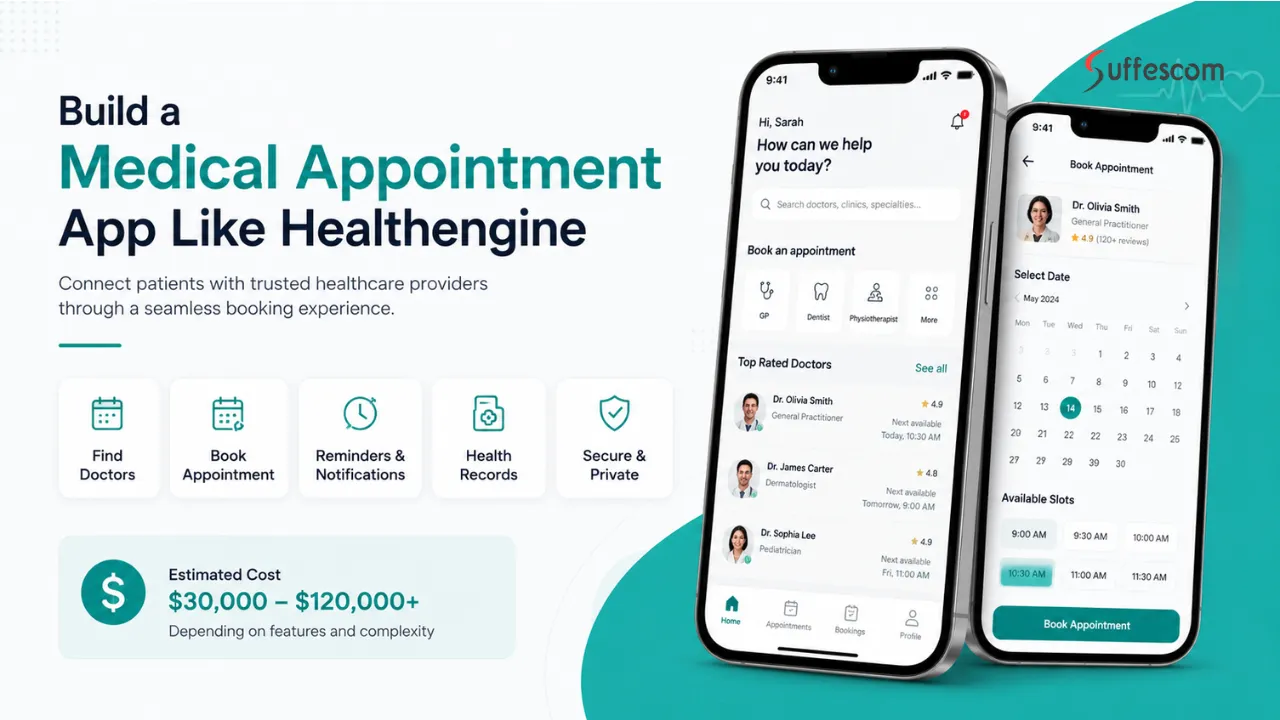
Digital technologies are being integrated into Australia’s medical system and are transforming how patients can now access telehealth and schedule appointments. Innovations in the development of medical appointment applications have changed how patients will be able to locate doctors, schedule appointments, conduct virtual consultations and keep their medical records via their mobile devices.
With the growing popularity of telehealth, mobile healthcare, and AI-based patient engagement throughout Australia, healthcare startups and organisations are developing healthcare appointment applications. Modern applications have many features including: AI-based appointment scheduling, video consultation capabilities, electronic prescription writing and automatic appointment reminders, all of which paired with a secure patient management system.
This guide will give you the resources you need to develop a healthcare appointment application similar to Healthengine’s Medical Appointment Application in Australia by providing information about: features for an appointment application, compliance requirements for an appointment application, how to incorporate AI into a modern appointment application, expected costs to build an appointment application, monetisation options for your appointment application and industry trends currently affecting the digital healthcare industry.
What is a Medical Appointment App like HealthEngine?
A medical appointment app like HealthEngine is a healthcare portal where a patient can find a healthcare provider, make appointments, consult via telemedicine, manage their medical records, and even interact with their doctor using mobile and web applications.
These platforms act as healthcare marketplaces that connect patients with:
- General practitioners (GPs)
- Specialists
- Dentists
- Physiotherapists
- Mental health professionals
- Diagnostic centers
- Hospitals
- Allied healthcare providers
Instead of calling clinics manually, users can instantly search healthcare providers based on:
- Specialty
- Location
- Availability
- Ratings & reviews
- Consultation type
- Insurance support
Healthcare appointment booking apps have made the process of booking a healthcare appointment easier by bringing all processes in one place.
Core Functions of a Healthcare Appointment App
Doctor Discovery
Finding a doctor is made easy through doctor discovery. With this function, you can filter based on specialty, location, availability, fees and customer feedback which all add to the ease with which users can connect to their correct Doctors, helping with reducing barriers to access for the Australian population.
Online Appointment Scheduling
Patients are able to use the app to book, reschedule or cancel their appointment in real-time which reduces the administrative burden that would have previously been required of clinics, while making the process of booking an appointment for the patient much faster and more convenient.
Telehealth Consultations
Telehealth consultations allow patients to make remote consultations with their doctors using video call, voice call, or chat. This service makes health care more accessible to users in regional and rural locations in Australia.
Digital Patient Management
With digital patient management, users can confidentially access their medical records, prescriptions, history of consultations, and delivery of diagnostic records through an app. This creates better engagement between patients and their providers while providing sustained high-quality care.
Payment & Billing
The payment and billing system enables patients to make payments online for consultation services. The use of online invoices, insurance, and subscription billing is included in this process.
Automated Notifications
Automated notifications send reminders for upcoming appointments, follow-ups, prescription renewals, and healthcare updates. These alerts help reduce no-show rates and improve communication between patients and healthcare providers.
Turn Your Healthcare Idea into a Digital Platform
Develop a feature-rich healthcare solution that patients trust in Australia.
Why HealthEngine Became Popular in Australia
A digital healthcare platform such as Healthengine has proven to be an effective way to improve patient experiences in the healthcare environment. Digital healthcare platforms use technology to increase speed of services and ease of management.
Prior to popularizing the use of a digital healthcare booking app, patients faced the following issues due to lack of access to the internet:
- Long wait times for phone calls
- Difficulty locating a physician
- Limited visibility of available appointments
- Time-consuming manual scheduling of appointments
- No access to telehealth services
Thus, the launch of a centralized, internet-based healthcare booking platform allowing patients to easily search for and book healthcare providers’ appointments in minutes was a game-changer for improving patient experiences.
Several factors contributed to its popularity in Australia.
Convenience and Accessibility
The app became widely used throughout Australia due to the highly accessible and uncomplicated nature of the appointment booking process when using the app. Users had access to doctor search capabilities, and were able to examine searched-for doctor’s appointment availability, and then book those appointments on their own as frequently or infrequently as they desired, without calling into clinics.
Real-Time Appointment Booking
The platform offers real-time appointment scheduling, allowing patients to instantly view available time slots and confirm bookings within minutes. This improves convenience for users while reducing administrative workload for healthcare providers.
Telehealth Adoption
The increased demand for telehealth services greatly contributed to the popularity of healthcare booking applications among Australians. Patients can consult with their doctors using phone calls or even video consultations.
Mobile-First User Experience
Today’s patients want to manage their healthcare using their mobile devices. An app makes this an easy, fast process for them by allowing patients to manage their own bookings with features that include reminder notifications and digital health records.
Patient Reviews and Transparency
Through the use of patient ratings and reviews, a patient has the ability to evaluate their healthcare options by comparing physicians by experience, appointment quality and office services therefore providing transparency and confidence in using the service.
Growing Demand for Digital Healthcare
There is a trend towards digital healthcare solutions in the Australian healthcare sector. The adoption of telemedicine and online booking systems has increased, as well as the use of AI in patient engagement.
Types of Medical Appointment Apps You Can Build
The development of healthcare apps for medical appointments could focus on various services, patients’ requirements, and business models within the field. Depending on your intended audience and the healthcare niche you want to serve, you can develop specific healthcare apps with particular functionality and revenue sources.
GP Appointment Booking Apps
GP appointment booking apps enable patients to locate and make appointments with general practitioners online. Such apps will include appointment scheduling, patient record management, prescription, and telemedicine consultation.
Example Use Case:
A patient from Sydney can easily look up local GPs, choose available appointment times, and book same-day appointments through the app.
Telemedicine Apps
These applications are dedicated to providing medical services through video conferencing, audio calling, and message services. They ensure that people have easier access to healthcare services without going to clinics physically.
Example Use Case:
With telemedicine applications, people from remote locations in Australia can consult with specialists via the internet.
Specialist Consultation Apps
These applications are used by healthcare professionals such as dermatologists, cardiologists, pediatricians, physiotherapists, and many other medical specialists. Such applications provide features like referrals and appointment management.
Example Use Case:
For instance, a person searching for a dermatologist in Melbourne can use specialist consultation applications to schedule appointments and upload medical reports.
Mental Health Apps
Mental health appointment apps connect users with psychologists, therapists, psychiatrists, and wellness professionals. These apps often include virtual therapy sessions, secure chat support, mood tracking, and mental wellness programs.
Example Use Case:
Users are able to arrange confidential therapy sessions via video calls.
Dental Appointment Apps
Dental appointment apps allow users to schedule appointments for their dental check-ups, orthodontic treatments, cosmetic dentistry, and emergency dental treatments. Features will include appointment reminders, treatment history, and clinic management features.
Example Use Case:
A dental clinic app will allow patients to make an appointment for teeth cleaning.
Multi-Clinic Healthcare Marketplaces
Multi-hospital healthcare ecosystems operate as centralized ecosystems in which individuals can utilize multiple hospitals, clinics, doctors, and health services from within a single app. Multi-clinic health apps will be great choices for enterprise-level healthcare organizations and huge healthcare organizations.
Example Use Case:
Multi-hospital health apps allow individuals to search and select healthcare providers in various cities via one application.
Step-by-Step Process to Build a Medical Appointment App Like Healthengine
Creating an appointment scheduling application like Healthengine involves several considerations such as strategic thinking, healthcare regulations, scalable technological platform, and a great user experience design. In that case, businesses have to pay particular attention to security, performance, and accessibility when developing healthcare applications because they involve handling private patients’ data and scheduling appointments in real-time.
Below is the whole procedure of creating a healthcare appointment application in Australia.
Step 1: Market Research & Competitor Analysis
It is important to conduct market research and analysis of competitors in the Australian healthcare environment in order to know the market situation.
Conducting competitor analysis allows evaluating various healthcare booking platforms such as Healthengine, HotDoc, and Galaxy.
At this stage, businesses should identify:
- Target audience
- Core healthcare services
- Revenue opportunities
- Market gaps
- User expectations
- Telehealth demand
This research helps create a strong product strategy before development begins.
Step 2: Define Business Model
After conducting market research, businesses must establish a business model for the healthcare app. The app architecture, revenue model, and workflow differ based on the type of healthcare application that needs to be built.
Typical business models for healthcare applications include:
- GP booking application
- Telemedicine application
- Consultation application
- Mental consultation application
- Healthcare marketplace with multiple clinics
Businesses should also finalize monetization strategies such as:
- Subscriptions
- Appointments commission
- Telemedicine consultation fees
- Featured providers
- SaaS license
Having a proper business model makes feature selection easier and ensures scalability.
Step 3: Select Features for MVP
Creating an MVP (Minimum Viable Product) is perhaps one of the most efficient ways to introduce a healthcare appointments application. Rather than spending time developing a complex platform, companies should choose features that address the key issues related to healthcare bookings and make patients’ lives easier. The main advantage of an MVP is its ability to help validate the business concept and save both money and time spent on development and launch.
Typical features of an MVP include user registration, doctors’ profiles, appointment scheduling, telemedicine consultations, payments, notifications, and patient dashboards. More advanced features, including AI-powered symptom checkers, wearable health monitoring tools, and predictive analysis, can be added once users become engaged with the application.
Step 4: UI/UX Design
The importance of UI/UX in the success of health appointments application is high since patients look for a user-friendly interface where they can easily navigate to find a doctor, make an appointment, consult the doctor, and handle their health records.
Healthcare applications must be designed using the mobile first approach but at the same time accessible to users of all generations. Such features as a simplified appointment process, clear menu, minimum user actions, readable font, and fast loading screen can contribute much to user engagement.
Step 5: Choose Tech Stack
A technology stack is essential to build a healthcare application that is secure and efficient to use. The stack affects how well the application performs; it can be scaled, maintained, and improved over time.
Common Technologies Used in Healthcare App Development
| Component | Recommended Technologies |
| Mobile App Development | Flutter, React Native |
| Backend Development | Node.js, Django, Laravel |
| Database | PostgreSQL, MongoDB |
| Cloud Hosting | AWS, Azure, Google Cloud |
| Video Consultation APIs | Twilio, Agora |
| Payment Gateways | Stripe, PayPal |
| Notifications | Firebase |
| AI Integration | OpenAI, TensorFlow |
Many developers prefer to use cross-platform development frameworks such as Flutter or React Native when creating healthcare applications because these frameworks allow developers to create applications for iOS and Android mobile platforms simultaneously, thereby saving time and money during the development process.
Step 6: Backend Development
The healthcare appointment application’s backend is the foundation of the system; it provides all of the system’s features and the logical operations that enable all of the system’s functions. The backend provides all of the services needed to process a user’s account; check the availability of doctors; book an appointment; provide telemedicine communication between a physician and patient; process payment for services performed; provide notification services; and maintain records related to patients.
The healthcare backend must be secure, highly scalable and cloud-based to accommodate the large amount of patient data. Developers must develop an encrypted API interface, a secure method for securely managing databases, and a secure authentication process for managing the security of the patient’s medical data.
Step 7: Telehealth Integration
The inclusion of telehealth functionality has become an essential feature of modern healthcare appointment applications in Australia. The inclusion of telemedicine functionality enables patients to access consultations remotely using secure channels of communication.
Telehealth features generally include:
- Video consultations
- Voice calls
- In-app chat
- E-prescriptions
- File sharing
- Follow-up consultations
Platforms such as Twilio and Agora are widely used for secure healthcare communication infrastructure.
Step 8: Testing & Compliance
Test and compliance verification are essential phases of the development process for healthcare applications since healthcare platforms contain confidential information about patients. The pre-launch phase includes functional test, security test, performance test, UI/UX test, and device test to make sure that the application is working seamlessly on all platforms.
In addition, healthcare applications in Australia need to comply with various regulations including Australian Privacy Principles (APPs), data encryption standards, and consent management. Effective compliance allows healthcare organizations to protect users’ personal data, mitigate risks, and establish trust between healthcare businesses and their clients.
Step 9: Launch & Deployment
After testing is completed, the healthcare app is deployed on platforms such as:
- Google Play Store
- Apple App Store
- Web platforms
The launch process also includes:
- App Store Optimization (ASO)
- SEO optimization
- Clinic onboarding
- User acquisition campaigns
- Marketing strategies
Many healthcare startups initially launch within a specific healthcare niche or region before scaling nationwide.
Step 10: Maintenance & Scaling
Continuous support continues after the launch of a healthcare app through regular upgrades to improve the reliability, security, and functionality of the app over time. These updates often provide solutions for any bugs that may have developed, make applications fast, improve the application workflow through stronger security systems, support any current mobile device by being compatible with current mobile technologies and provide compliance with ever-changing healthcare laws and regulations.
Companies can also add complex features to their application, for example, with a comprehensive healthcare management system, by incorporating text-to-speech technology or online AI health assistants, wearables integration, predictive analytics, and 100% language support. Having proper scalability for their applications allows healthcare applications to accommodate increasing numbers of users while offering exceptional user experiences to their patients.
Modernize Patient Appointment Management
Streamline bookings and improve patient engagement with healthcare app development.
Core Features of an App Like Healthengine
A healthcare appointment application like Healthengine needs to have a mixture of patient-oriented features, doctor management features, and healthcare-related functions. This is done to ensure that appointment scheduling is efficient, patient interaction is enhanced, clinic management is easy, and digital healthcare services are delivered seamlessly.
The following are some of the key features needed when developing a healthcare appointment application.
Patient Panel Features
User Registration & Login
The use of a secure user registration and login system enables users to create their accounts either by using their email, phone number, or even social media logins. Health applications also have multi-factor authentication and secure verification methods to protect confidential user data.
Doctor Search & Smart Filters
Patients can find a doctor through specialty, location, availability of appointments, cost of consultations, rating of the doctor (if applicable), and the ability to hold telehealth appointments. Smart Filters will help narrow down the specific list of doctors.
Appointment Scheduling
Patients will have the ability to schedule/ reschedule or cancel their doctor’s appointment in real-time through the platform that provides instant availability of the doctors and appointment confirmation. Thus, streamlining the overall scheduling process.
Telehealth Video Consultations
Patients can obtain virtual consultations with various types of physicians using telehealth technology by taking advantage of video calling, audio calling and/or chat via the application. This is important in order to increase access to healthcare, particularly in rural or remote areas.
Digital Patient Records
Patients may now access their prescriptions, medical histories, consultations, test results and treatments through the app safely. Digital management of patient records allows for greater care continuity and enhances convenience for patients.
Secure Payment Integration
Payments for consultations can be made securely by patients using credit cards, digital wallets, subscriptions or billing charges supported by insurance. Automated invoices and transaction records attention is provided by automated records management.
Notifications & Appointment Reminders
The reminder system and notification methods including SMS, email, push notifications, inform patients about appointments, prescription refill, latest health news and follow up appointment timely. The reminder system is able to help clinics to minimize the number of patients who visit clinics shown by patients.
Ratings & Reviews
Users are able to rate the quality of consultation service, the interaction and communication between the users and providers, the general experience of the clinics and satisfaction with the whole service.
Doctor Panel Features
Doctor Profile Management
Doctors can update their profile on the platform, manage their consultation fee, specialties, clinic and their schedule management.
Appointment & Schedule Management
All health providers can manage all appointments, manage their schedule, update their availability, manage cancellation/rescheduling on the go via a centrally managed dashboard.
Telehealth Consultation Dashboard
Doctors can perform secure video consultations with patients, have access to all the records, can share prescriptions, and chat with the patients through the telehealth dashboard.
E-Prescriptions & Consultation Notes
Providers generate e-prescriptions and maintain electronic consultation records through a single digital platform reducing the amount of paper to support operational efficiency and increase patient access to healthcare.
Revenue & Analytics Dashboard
Analytics dashboards enable healthcare companies to monitor appointment management, consultation revenue, patient engagement, and business performance using live reporting tools.
Admin Panel Features
User & Doctor Management
The admin panel enables the management of patients, doctors, healthcare businesses, and clinics, while tracking user activities on the site.
Appointment Monitoring
The admin panel provides businesses with the ability to track appointment management, cancellations, teleconsultation, and performance of consultations in real time.
Provider Verification
Healthcare businesses are able to verify the qualifications of doctors and clinics on the platform to ensure authenticity and reliability.
Commission & Revenue Management
Administrators can control payment systems, subscription systems, appointment commission systems, featured listing systems, and revenue systems.
Content & Support Management
The system can provide support management, FAQ management, healthcare content publishing, and notification management for better patient engagement.
| Feature Category | Patient Panel Features | Doctor Panel Features | Admin Panel Features |
| Authentication & Profiles | User registration, login, profile management | Doctor profile management, specialization details | User & doctor account management |
| Appointment Management | Appointment booking, rescheduling, cancellation | Schedule & appointment management | Appointment monitoring & tracking |
| Search & Discovery | Doctor search, smart filters, clinic discovery | Visibility management | Provider verification |
| Telehealth Functionality | Video consultations, chat, voice calls | Telehealth consultation dashboard | Telehealth activity monitoring |
| Medical Records | Digital patient records, prescriptions, reports | Consultation notes, e-prescriptions | Healthcare data management |
| Payments & Billing | Secure payments, invoices, subscriptions | Revenue tracking | Commission & payment management |
| Notifications & Alerts | Appointment reminders, healthcare notifications | Patient follow-up notifications | System-wide notification management |
| Reviews & Feedback | Ratings & reviews | Patient engagement tracking | Feedback moderation |
| Analytics & Reporting | Appointment history | Revenue & patient analytics | Business analytics dashboard |
| Support & Communication | Customer support access | Patient communication tools | Content & support management |
Advanced Features to Compete with Healthengine
The modern appointment application software is now incorporating AI-based and smart healthcare solutions to improve the user experience and deliver customized healthcare services. The incorporation of advanced healthcare services can assist businesses to differentiate their platform from other competing brands such as Healthengine and create a future-proof digital healthcare ecosystem.
AI-Powered Symptom Checker
An AI-based symptom checker allows the patient to check their symptoms before scheduling any consultation through machine learning and healthcare data analytics.
Real-World Example:
A user experiencing skin irritation can enter symptoms into the app, and the AI system may recommend booking an appointment with a nearby dermatologist.
AI Doctor Recommendations
The AI recommendation engine analyzes the patient’s preferences, past medical history, location, ratings, and availability of the doctors to provide customized recommendations.
Real-World Example:
In case a person is used to scheduling online consultations, then the application will recommend online doctors with good reviews and availability.
Voice Search & Voice Booking
Through such technology, such as voice-enabled healthcare applications, patients can search for physicians through voice commands and make appointments with greater ease and convenience than they would otherwise be able to.
Real-World Example:
A user only needs to speak the phrase, “Book me an appointment with a GP tomorrow morning near me,” and the app will show all the available doctors and timeslots.
Smart Chatbots
AI chatbots provide instant patient support by answering healthcare queries, guiding appointment bookings, sending reminders, and assisting users throughout the healthcare journey.
Real-World Example:
A healthcare chatbot can help patients find specialists, explain telehealth procedures, and reschedule appointments without requiring manual customer support assistance.
Wearable Device Integration
Wearable integrations allow healthcare apps to collect real-time health data from smart devices such as fitness trackers and smartwatches. This helps doctors monitor patient health more effectively.
Real-World Example:
Data about patients’ heart rate or sleep patterns from smartwatches is transmitted to healthcare professionals before consultations.
AI Healthcare Analytics
AI healthcare analytics are used by clinics and healthcare organizations to make intelligent analyses of patient behavior, appointment patterns, consulting demands, and performance using intelligent data analysis systems.
Real-World Example:
Healthcare organizations can apply AI analytics to determine the busiest hours for bookings and arrange doctors’ schedules in order to cut down on patients’ waiting time.
Electronic Health Record (EHR) Integration
Integration with electronic health records allows for the secure exchange and management of patients’ medical information, prescriptions, consultations, and diagnostic information.
Real-World Example:
When a patient consults a specialist, he can permit the doctor to access his consultation information and prescriptions through digital healthcare systems.
MVP Features vs Advanced Features
In order to develop an effective medical appointment application such as Healthengine, companies need to concentrate on developing basic MVP features first before considering the use of advanced AI-driven healthcare capabilities. An MVP is a strategy that enables startups to start their operations more quickly while minimizing costs and validating the business concept at the same time.
Once the application has been developed successfully, advanced healthcare technologies such as AI-driven symptom checkers, predictive scheduling, wearable technology integration, and voice-driven healthcare services can be considered.
| MVP Features | Advanced Features |
| User login & authentication | AI symptom checker |
| Appointment booking | Predictive scheduling |
| Doctor profiles | Wearable device integrations |
| Notifications & reminders | AI healthcare assistant |
| Secure payments | Voice-based booking |
Essential Integrations for Healthcare Appointment Apps
The importance of third-party integrations cannot be understated when it comes to improving the efficiency, scalability, and UX of healthcare appointment applications. The inclusion of secure payment systems, telehealth APIs, healthcare databases, notifications, and AI is key to helping healthcare organizations optimize their processes and provide a great digital healthcare experience.
Payment Gateway Integrations
The use of secure payment gateways enables patients to pay their consultation fees via the application, either via debit/credit cards, digital wallets, subscriptions, or online bank payments. This ensures that payment processes become easier for both the patients and healthcare providers.
Stripe
Stripe is popular in the healthcare sector for handling payments, subscriptions, invoices, and multi-currency transactions securely. It allows for quick integration and security options in healthcare platforms.
PayPal
PayPal helps facilitate secure online payments and is popular for payments in telehealth, online healthcare subscriptions, and cross-border healthcare services.
Video Consultation APIs
Video consultation APIs are necessary in telehealth app development. They allow for secure video and voice conversations, along with screen sharing.
Twilio
Twilio is known for its secure video communication APIs and is common in telemedicine and healthcare consultation applications.
Agora
Agora provides low-latency video and voice communication services for healthcare applications requiring consistent telehealth consultation capabilities.
Healthcare APIs
Healthcare APIs facilitate the safe exchange of medical data, patient records, and healthcare services among other features, in healthcare applications.
Medicare Integrations
Medicare integration is essential in facilitating insurance claims, billing processes, and reimbursement of healthcare expenses within the Australian healthcare framework.
EHR Systems
The Electronic Health Record (EHR) integrations enable healthcare professionals to have secure access to medical history, prescriptions, diagnostic results, and consultations of their patients.
Pharmacy APIs
Pharmacy API integrations assist in offering patients digital prescriptions, medicine availability, and online pharmacy services among others.
Notification Systems
Notification services assist healthcare applications in automating patient communications about appointments, reminders, medications, and other healthcare updates.
Firebase
Firebase serves as a popular tool for push notifications, real-time database integration, user authentication, and healthcare application messaging services.
SMS Gateways
The use of SMS gateways facilitates the sending of appointment confirmations, reminders, OTP codes, and other healthcare messages to patient phones.
AI APIs
Integrations with AI APIs enable healthcare applications to achieve better automation, personalization, predictive analytics, and patient engagement via intelligent healthcare systems.
OpenAI
The OpenAI API enables the development of AI symptom checkers, healthcare chatbots, appointment assistance, automated patient support, and healthcare content generation in medical appointment applications.
Google Healthcare AI
Google Healthcare AI solutions facilitate the analysis of healthcare data and improvement of predictive healthcare systems for clinical decision-making.
| Integration Category | Popular Integrations | Purpose in Healthcare Appointment Apps |
| Payment Gateway Integrations | Stripe, PayPal | Secure online payments, subscription billing, invoices, telehealth consultation payments |
| Video Consultation APIs | Twilio, Agora | Video calls, voice consultations, telehealth communication, secure patient-doctor interactions |
| Healthcare APIs | Medicare integrations, EHR systems, Pharmacy APIs | Insurance processing, patient record management, digital prescriptions, healthcare data exchange |
| Notification Systems | Firebase, SMS gateways | Push notifications, appointment reminders, OTP verification, healthcare alerts |
| AI APIs | OpenAI, Google Healthcare AI | AI symptom checker, healthcare chatbots, predictive analytics, automated patient engagement |
Example Workflow of a Medical Appointment App
Understanding how users navigate your health care appointment app is critical to providing an improved patient experience, increasing patient engagement, and delivering health care services efficiently. A workflow that enables patients to search for doctors, schedule appointments, attend virtual visits and access health care services will create an effective patient experience.
This is an example of a high-level process that could be followed to develop a doctor appointment application.
| Step | User Journey Workflow | Purpose |
| Step 1 | User downloads and installs the app | Access healthcare services digitally |
| Step 2 | User registers and creates a profile | Secure authentication and patient management |
| Step 3 | Searches for doctors by specialty or location | Find suitable healthcare providers quickly |
| Step 4 | Select an available appointment slot | Real-time scheduling convenience |
| Step 5 | Makes secure online payment | Simplified billing and consultation payments |
| Step 6 | Joins the telehealth consultation | Remote healthcare access through video or voice call |
| Step 7 | Receives digital prescription | Faster and paperless healthcare management |
| Step 8 | Gets automated follow-up reminders | Improve patient engagement and reduce missed consultations |
In practice, if someone feels sick and experiences flu-like symptoms, he or she will be able to launch the app, look for the nearest GP, schedule a video appointment, pay for the visit online, and take part in the consultation via the app interface.
Afterward, the physician will be able to send an electronic prescription and schedule automatic follow-ups regarding the consumption of prescribed medicines.
The described process saves time for both patients and healthcare providers by optimizing administrative activities, improving appointment management, and increasing the speed of providing digital healthcare services in Australia.
Upgrade Your Clinic with Digital Healthcare Solutions
Enable online consultations, automated reminders, and secure patient record management effortlessly.
Best Tech Stack for Healthcare App Development
The choice of a proper tech stack is one of the key factors that should be considered at the early stage of healthcare app development.
Mobile App Development
Mobile app development tools play an important role in developing efficient and seamless healthcare applications that are compatible with both Android and iOS platforms. The selection of an appropriate framework enables companies to save money on development while improving their performance and launching their healthcare appointment applications sooner.
Recommended Technologies:
- Flutter
- React Native
Frontend Development
The frontend development tools enable the creation of a fast and interactive interface for users, such as patients, doctors, and administration panels.
Recommended Technologies:
- React.js
- Next.js
Backend Development
Backend development technologies deal with scheduling appointments, patient identification, doctors’ availability, telemedicine features, payment management, notifications, and health care information processing. The scalability of the back-end is crucial for managing the increasing number of patients and carrying out health care activities efficiently.
Recommended Technologies:
- Node.js
- Django
- Laravel
Database Management
Database management technologies will be responsible for storing and managing health care information such as patient records, prescriptions, appointments, consultations, and other important patient information.
Recommended Technologies:
- PostgreSQL
- MongoDB
Cloud Hosting & Infrastructure
The cloud hosting platform ensures secure and high-performing infrastructure for healthcare appointment app development. The cloud helps the healthcare business to effectively deal with growing numbers of users, storage needs, back-up, and compliance issues.
Recommended Technologies:
- AWS
- Google Cloud
- Microsoft Azure
Authentication & Security
The security system ensures the safety of private patient details using authentication and encryption technology. Security infrastructure plays a vital role in healthcare compliance.
Recommended Technologies:
- OAuth 2.0
- JWT Authentication
- Multi-Factor Authentication
AI & Machine Learning Technologies
AI integration enables the provision of automated healthcare applications with predictive analytics, AI-based symptom checker services, virtual assistance with healthcare, and personalization of patient engagement.
Recommended Technologies:
- OpenAI
- TensorFlow
- Google Healthcare AI
DevOps & Deployment
DevOps technologies help automate deployment, infrastructure scaling, server management, and application monitoring. These tools improve development efficiency and ensure healthcare apps remain stable during high user activity.
Recommended Technologies:
- Docker
- Kubernetes
- GitHub Actions
| Technology Area | Recommended Technologies | Purpose |
| Mobile App Development | Flutter, React Native | Cross-platform healthcare app development for Android & iOS |
| Frontend Development | React.js, Next.js | Responsive and interactive healthcare web interfaces |
| Backend Development | Node.js, Django, Laravel | Appointment management, authentication, APIs, and healthcare operations |
| Database Management | PostgreSQL, MongoDB | Secure storage of patient records and healthcare data |
| Cloud Hosting & Infrastructure | AWS, Google Cloud, Microsoft Azure | Scalable and secure healthcare cloud infrastructure |
| Authentication & Security | OAuth 2.0, JWT, Multi-Factor Authentication | User authentication and healthcare data protection |
| AI & Machine Learning Technologies | OpenAI, TensorFlow, Google Healthcare AI | AI symptom checker, chatbots, predictive analytics |
| DevOps & Deployment | Docker, Kubernetes, GitHub Actions | Deployment automation and infrastructure scalability |
Healthcare Compliance Requirements in Australia
Appointment apps for healthcare have sensitive patient data, making security and compliance much more important than ordinary mobile applications. Companies producing healthcare applications in Australia need to adhere to strict healthcare regulations, privacy laws, and data security requirements in order to provide safety for patients, comply with the law, and secure healthcare processes.
Australian Privacy Principles (APPs)
Australian Privacy Principles (APPs) regulate how healthcare businesses collect, store, manage, and share personal health information. Healthcare apps must ensure transparent data handling practices and protect patient privacy at every stage.
Data Encryption Standards
The healthcare application should be able to encrypt data to protect sensitive data such as medical records, prescriptions, payments, and communications between doctors and patients.
Secure Authentication
Multi-factor authentication, biometric authentication, and password management are required in order to maintain the security of healthcare accounts.
Consent Management
Consent management must be in place for all mobile applications providing health services. In order to collect, store and share a patient’s personal health information, a patient must provide proper consent prior to the collection of their personal health information.
Telehealth Regulations
All telehealth services provided in Australia must comply with the standards set forth for communication between healthcare providers and patients, including rules pertaining to confidentiality of patient information and secure video consultation protocols.
HIPAA & GDPR Considerations
If your health app will be an international audience or seeking to grow internationally, then it will need to comply with both the HIPAA and GDPR laws regarding secure healthcare info and patient privacy.
My Health Record Integration
Integration with Australia’s My Health Record system allows healthcare providers to securely access patient medical history, prescriptions, and healthcare records. This improves continuity of care and streamlines digital healthcare management.
Common Mistakes to Avoid While Developing a Healthcare App
Avoiding common healthcare app development mistakes helps businesses build secure, scalable, and user-friendly digital healthcare solutions.
Ignoring Healthcare Compliance
Healthcare compliance is one of the most important aspects that startups tend to ignore. Failing to comply with Australian healthcare guidelines can cause various problems, including legal complications, losses, and a decline in trust among patients.
Weak Data Security
Healthcare applications have access to sensitive personal information of patients. Therefore, companies need to ensure that their products have robust infrastructure and secure storage. Otherwise, healthcare apps will face cyberattacks and data breaches.
Poor UI/UX for Elderly Users
Many healthcare apps fail to provide simple and accessible interfaces for elderly users who may not be comfortable with complex digital systems. Clean layouts, readable fonts, and easy navigation are essential for improving healthcare accessibility.
Overcomplicated Booking Flows
Booking appointments through lengthy booking processes can discourage users and increase abandoned appointments and the use of the app. Therefore, when users are able to quickly search for and schedule an appointment after entering only a few fields, this will enhance their usage of the app.
Lack of Scalability
Some applications are designed with no plan for scaling up the application as user traffic increases. This will create performance challenges and strain on the system as the number of appointments, telehealth visits, and other healthcare data continues to increase.
Poor Telehealth Optimization
Today’s patients are used to experiencing telehealth, but the majority of healthcare applications do not adequately optimize the telehealth function for video/real-time communication. Since telehealth is such an important component of engaging patients with their providers, not optimizing telehealth greatly diminishes consumer use of the app.
How AI is Transforming Healthcare Appointment Apps
Healthcare technology platforms are now incorporating artificial intelligence solutions to make appointments easier, improve telemedicine services, and provide more effective healthcare advice.
AI-enabled healthcare systems can assist companies in minimizing manual effort while increasing patient satisfaction and healthcare availability throughout Australia’s rapidly evolving digital health environment.
AI Scheduling Systems
AI scheduling systems automatically optimize appointments based on the doctor’s availability, patient preferences (i.e. time for each appointment), type of consultation and any peak booking periods. Minimizing any chance of scheduling conflicts.
Predictive Healthcare Recommendations
Using predictive AI, the patient’s prior behaviour and medical history data, as well as booking trends, will help provide the patient with the best healthcare provider, time for his or her appointment and the best possible type of health services. This will greatly improve the patient experience and allow him or her to obtain healthcare faster.
AI Chatbots
AI chatbots provide real-time assistance to the patient through responding to their inquiries, making appointments for them, reminding them of their appointments and providing direction on how to proceed through the health care process. Using chatbots can increase access to those healthcare businesses and reduce the need for customer service personnel.
Generative AI in Healthcare
Generative AI can assist healthcare businesses in automating the content creation process for their website, documenting consultation notes, communicating with the patient and providing assistance for healthcare businesses through automation.
NLP-Based Patient Support
NLP (Natural Language Processing) enables healthcare apps to communicate with patients via a conversational format by allowing them to interpret the questions that the patient has. The use of NLP allows chatbots to communicate better with the patient, analyze the patients’ symptoms, help with voice search, and support the patient in multiple languages.
AI-Driven Patient Engagement
Healthcare applications can utilize an AI-based patient engagement system to provide the patient with personalized reminders, healthcare recommendations, follow-up reminders, wellness suggestions, and preventive healthcare notifications based on past behavior and medical history of the patient.
Real World Example:
An example of the use of AI is that it can recommend an available GP based on the patients’ symptoms, wait time to see the doctor at the clinic, the location the patient prefers, the rating the patient gives to the doctor, and the patient’s history of consulting the doctor. By utilizing AI it eliminates the need to manually compare the doctors in order to locate the doctor the patient would prefer to see for a more efficient and personalized healthcare experience.
Healthengine vs Other Healthcare Booking Apps
In designing a health appointment application such as Healthengine, it is essential to know how it performs in comparison to other similar healthcare appointment applications in Australia. Although each application caters to a different set of users, customized healthcare applications have the most flexibility and AI-powered innovations.
Below is a detailed comparison of popular healthcare booking applications.
| Platform | Best For | Telehealth | AI Features | Customization |
| Healthengine | General healthcare users | Yes | Moderate | Limited |
| HotDoc | Clinic & GP management | Yes | Moderate | Limited |
| Galaxy | Specialists & practitioners | Yes | Moderate | Moderate |
| Custom Healthcare App | Startups & enterprises | Yes | Advanced | Full |
HotDoc is popularly used by clinics for appointment booking and minimizing administrative burden, while Galaxy serves as an all-in-one solution for specialty practices, offering advanced scheduling and practice management capabilities.
Why Build a Custom Healthcare Appointment App Instead of Using Existing Platforms
Building your own healthcare appointment app not only gives you the freedom to control product and features offered, but ensures you get future opportunities for scalability and customization unlike any other app.
- Full Ownership: By opting to build your own custom app, your company will have complete ownership of branding, features, UX, and entire platform with no restrictions from any third-party or platform.
- Better Scalability: With escalating numbers of users, appointments and clinics, you don’t need to worry about the performance of your healthcare app. The application is developed with adequate scalability.
- AI Integration Flexibility: Utilize custom integrations of smart features like predictive scheduling, smart recommendations and AI symptom checkers without any restrictions from the third-party. Enable innovation in patient care with advanced AI integration.
- Custom Workflows: Define specific and tailored appointment flows and telemedicine flows in line with your healthcare organization to improve the overall workflow efficiency.
- Data Ownership & Security: Securely maintain the ownership of all patient data and healthcare data. This plays a critical role while complying with Australian regulatory laws.
How Much Does It Cost to Build an App Like Healthengine?
Developing a healthcare appointment mobile app similar to Healthengine requires multiple factors to be considered, including app features, app complexity, types of integration used, compliance with the Health Insurance Act (HIA), and any artificial intelligence functionality needed in your healthcare app.
Depending on whether you are developing an MVP, mid-tier app, or high-end artificial intelligence healthcare system, the healthcare app development cost in Australia will vary between AUD 30,000 and AUD 400,000+.
Basic MVP Cost
MVP healthcare app is designed with simple features such as doctor list, appointment booking, login, and notifications. This type of app is perfect for startups looking to test out their concept at a low cost.
In most cases, the typical price for MVP healthcare apps in Australia is AUD 30,000 to AUD 80,000.
Mid-Level Healthcare App Cost
A mid-level healthcare app comes with features such as telehealth appointments, payments, EHR, and improved UI/UX. Such an app will suit clinics, startups, and healthcare platforms that want to scale their business.
The average cost of a mid-level healthcare app lies in the range of AUD 80,000 to AUD 200,000.
Advanced AI-Powered Platform Cost
High-end healthcare applications consist of symptom-checking AI tools, predictive scheduling, integration with wearables, voice booking, and analytics dashboards. These applications would need high-end infrastructure, security systems, and AI models that constantly need training.
The typical cost of developing such applications is around AUD 200,000 to AUD 400,000+.
| App Type | Estimated Cost (AUD) | What It Includes |
| Basic MVP Healthcare App | AUD 30,000 – 80,000 | Core features like login, doctor search, appointment booking, basic notifications, and simple backend system |
| Mid-Level Healthcare App | AUD 80,000 – 200,000 | Telehealth integration, payment gateway, EHR integration, advanced UI/UX, and scalable backend |
| Advanced AI Healthcare Platform | AUD 200,000 – 400,000+ | AI features (symptom checker, predictive scheduling), wearable integration, analytics, voice booking, and enterprise-grade architecture |
Cost Breakdown Table
| Development Component | Estimated Cost (AUD) |
| UI/UX Design | AUD 5,000 – AUD 40,000 |
| Frontend Development | AUD 15,000 – AUD 80,000 |
| Backend Development | AUD 20,000 – AUD 120,000 |
| AI Integrations | AUD 20,000 – AUD 150,000 |
| Compliance & Security | AUD 10,000 – AUD 60,000 |
Factors Affecting Healthcare App Development Cost
Feature Complexity
The number of features a healthcare application has, for example, booking system, dashboard and patient management tools, directly impacts the cost of its development. Complex workflows mean more work and testing time during the development process.
AI Integrations
Incorporation of AI technologies, such as symptom checker, predictive scheduling and chatbot services, leads to increased development expenses due to training and optimization of the models used.
Telehealth Features
Video consultations, real-time messaging, and remote monitoring require secure and high-performance infrastructure, which adds to both development and maintenance costs.
Compliance Requirements
Strict laws and regulations, such as Australian Privacy Principles (APP), have implications for the cost of the development of healthcare applications because of necessary implementation and audit measures.
Third-Party APIs
Integration of third-party solutions, such as payment gateways, electronic health record systems, and video calls, involves additional fees based on their complexity and use.
Development Team Location
Costs of developing an application depend on the geographical location of the development team, with teams located in Australia and the USA being much more expensive than those in Asia.
App Scalability
Development costs will be increased if a scalable architecture is needed to support the expected user traffic and data storage requirements.
Know the Exact Cost of Your Telehealth App
Understand development expenses for telemedicine, AI integrations, and healthcare compliance features.
How Long Does It Take to Build a Medical Appointment App Like Healthengine?
It usually takes several weeks to a few months to develop a healthcare appointment application like Healthengine. In some cases, an MVP may be developed much quicker; however, the development of AI-based or telemedicine-enabled apps requires more time because of the complexities of the back-end architecture and additional security measures.
Quick Answer
An MVP of a healthcare appointment application may be developed within 2 to 4 months in Australia, while a more complex AI-based version would take 4 to 9+ months.
| Development Stage | Duration |
| Planning | 2–4 Weeks |
| UI/UX Design | 3–6 Weeks |
| MVP Development | 2–4 Months |
| Testing | 1–2 Months |
| Deployment | 1–2 Weeks |
Monetization Strategies for Medical Appointment Apps
There are several ways in which healthcare appointment booking applications such as Healthengine make money. This is necessary to ensure that the business will be sustainable and yet affordable to both parties involved.
Subscription Plans
Subscription plans are where clinics, doctors, or other healthcare service providers pay a subscription fee per month or year to access the application. In doing so, they benefit from special features offered by the platform.
Commission on Appointments
Here, the platform earns from each appointment made through the application. This is among the most popular monetization techniques for healthcare marketplaces.
Featured Doctor Listings
Either doctors or clinics can pay to feature themselves as the first listings on the search results or have increased visibility on the platform. This helps attract more patients for the doctors while earning money for the app.
Telehealth Consultation Fees
The platform can earn money through fees charged on consultations made using video and voice calls. This business model is most suitable since telehealth usage will keep increasing in Australia.
SaaS Licensing
This is a business model where the software is licensed by the healthcare organizations that will make use of the software to manage appointments and telehealth services.
Challenges in Building a Healthcare Appointment App
Developing an application for booking appointments in the healthcare industry, such as Healthengine, presents various technical and operational difficulties. One of the key issues is adherence to healthcare rules such as Australian Privacy Principles (APPs), protection of personal information, and end-to-end encryption.
Moreover, the app needs to be integrated with sophisticated tools like EHR systems, payment gateways, and telehealth API while delivering great performance and avoiding any data loss, thus making the development process more difficult and expensive.
Finally, designing the application to provide users from different categories – elderly patients, doctors, and clinic administrators – with a smooth experience is another challenge.
Future Trends in Healthcare App Development
Emerging technologies such as Artificial Intelligence (AI), Virtual Reality (VR), real-time data and intelligent Automation systems are advancing rapidly the capabilities of healthcare appointment apps, one such example being HealthEngine.
AI Healthcare Assistants
AI healthcare assistants will support patients with symptom checking, appointment booking, medication reminders, and personalized health guidance. These assistants will act as 24/7 digital health support systems.
Voice-Based Healthcare Booking
Using Voice-Assisted Booking allows patients to use voice commands to search for and book appointments with their physician through your phones. This method of making an appointment will improve patient access to healthcare services, especially for the elderly and patients with disabilities.
AR/VR Telemedicine
The use of augmented reality (A/R) and Virtual reality (V/R) will give healthcare providers the ability to do telemedicine examinations with patients in virtual environments.
Blockchain in Healthcare
With blockchain technology, healthcare providers will be able to ensure the safety of their healthcare data by using it to store and share patient health data in a secure manner.
IoT Healthcare Monitoring
IoT-enabled devices like wearable technology would continuously measure vital signs, heart rate, glucose level, and sleeping patterns of patients and communicate this data in real time to doctors.
Predictive Healthcare Analytics
Predictive analytics will allow healthcare platforms to provide better forecasts of patient requirements, to detect health risks at an early stage, and to optimize appointment schedules. Thus allowing better use of resources and improved patient outcomes.
Conclusion
To develop an online appointment booking application such as Healthengine, it is necessary to have a good mix of planning, innovation, compliance, and user design. Each step is equally important from MVP creation through sophisticated artificial intelligence functionality in forming a digital health environment that provides all the benefits expected by today’s patients in Australia.
In the changing landscape of the healthcare field, digital platforms are increasingly becoming a key requirement for increasing accessibility, decreasing administrative burden, and improving care. Companies that adopt artificial intelligence, telemedicine, and cloud-based health solutions will find themselves more competitive in the expanding field of health technologies. In the end, it all comes down to developing a credible platform with the support of a healthcare app development company with experience developing such solutions.
Get a Free 30-Minute App Consultation
Discuss your healthcare app idea with our experts and receive a customized development roadmap and cost estimate.
FAQs – Healthcare Appointment App Like Healthengine
1. What is a healthcare appointment app like Healthengine?
A healthcare appointment app such as Healthengine is a digital way for users to search and book doctors, schedule an appointment and do Telehealth visits, all online.
2. How does a medical appointment app work?
You can create a medical appointment app by allowing patients to search and browse their Doctors and their schedules, schedule appointments with them, pay for their appointments, and have an in-person meeting or have a Telehealth appointment with them.
3. How much does it cost to build a healthcare app in Australia?
The cost of developing a healthcare app in Australia can range between AU 30000 and AU 40000 for an AI-based healthcare application.
4. How long does it take to develop a healthcare appointment app?
The estimated time required to develop a healthcare appointment app can be anywhere from 2 to 4 months for a minimum viable product (MVP) and 4 to 9+ months for a more complex version.
5. What features should a healthcare appointment app include?
A healthcare appointment app will typically include the capability to search for and view Doctor profiles, schedule appointments with them, pay for those appointments, receive notifications and store patient information in a digital environment.
6. What is the difference between MVP and advanced healthcare apps?
There are two primary types for Building Out Your Application – an MVP or a more advanced application. share some elements but function differently; thus an MVP generally will have the core functionality for your customers, while a more Advanced Version has all the same features as your MVP plus advanced features that increase user engagement and increase your app’s potential customer base.
7. Is telehealth important in healthcare apps?
For telehealth within Healthcare Apps, having a telehealth solution will enable your patients to access their doctors via video conferencing or voice calling, which provides your patients access to their doctors remotely, making healthcare more readily available and convenient.
8. What technologies are used to build healthcare apps?
Technologies you use for developing healthcare Apps can vary greatly but can include technologies such as; Flutter for cross-platform app development, React Native, Node.js, and/or AWS for backend development, PostgreSQL, Twilio, and/or Stripe for payment processing; And lastly, AI tools including; OpeAI and/or TensorFlow, as a form of predictive analytics etc.
9. Are healthcare apps secure?
YES – If built using the proper procedures, such as Encryption, Secure Authentication and Meets All Required Health Related Legislation Such As The Australian Privacy Principles (APPs).
10. What regulations apply to healthcare apps in Australia?
In Australia, healthcare apps must comply with the Australian Privacy Principles (APPs), Data Protection Laws, Telehealth Legislation and Consent Management Policies etc.
11. Can AI be used in healthcare apps?
Yes, the main areas include checking symptoms, recommending doctor specialties, scheduling appointments, providing chatbots and patient engagement.
12. How do healthcare apps make money?
Sources of revenue are: subscriptions to certain functionalities or services, commissions for booking doctor appointments, featured listing in search results of doctors, charges for remote consultation services, and SaaS payment.
13. What are the challenges in building a healthcare app?
Challenges of developing a healthcare app are regulations, information security, scalability, telehealth and simple user interface.
14. Why is UI/UX important in healthcare apps?
Good UI and UX lead to simpler and faster access to healthcare services such as booking appointments and it’s extremely significant for elderly or non-tech savvy users.
15. Can a healthcare app integrate with existing hospital systems?
Health-related mobile apps can be integrated into an existing hospital system such as connecting with EHR systems, through the use of Medicare APIs, pharmacy systems, and existing databases. This allows for the seamless exchange of data.
Need Help With
Development?